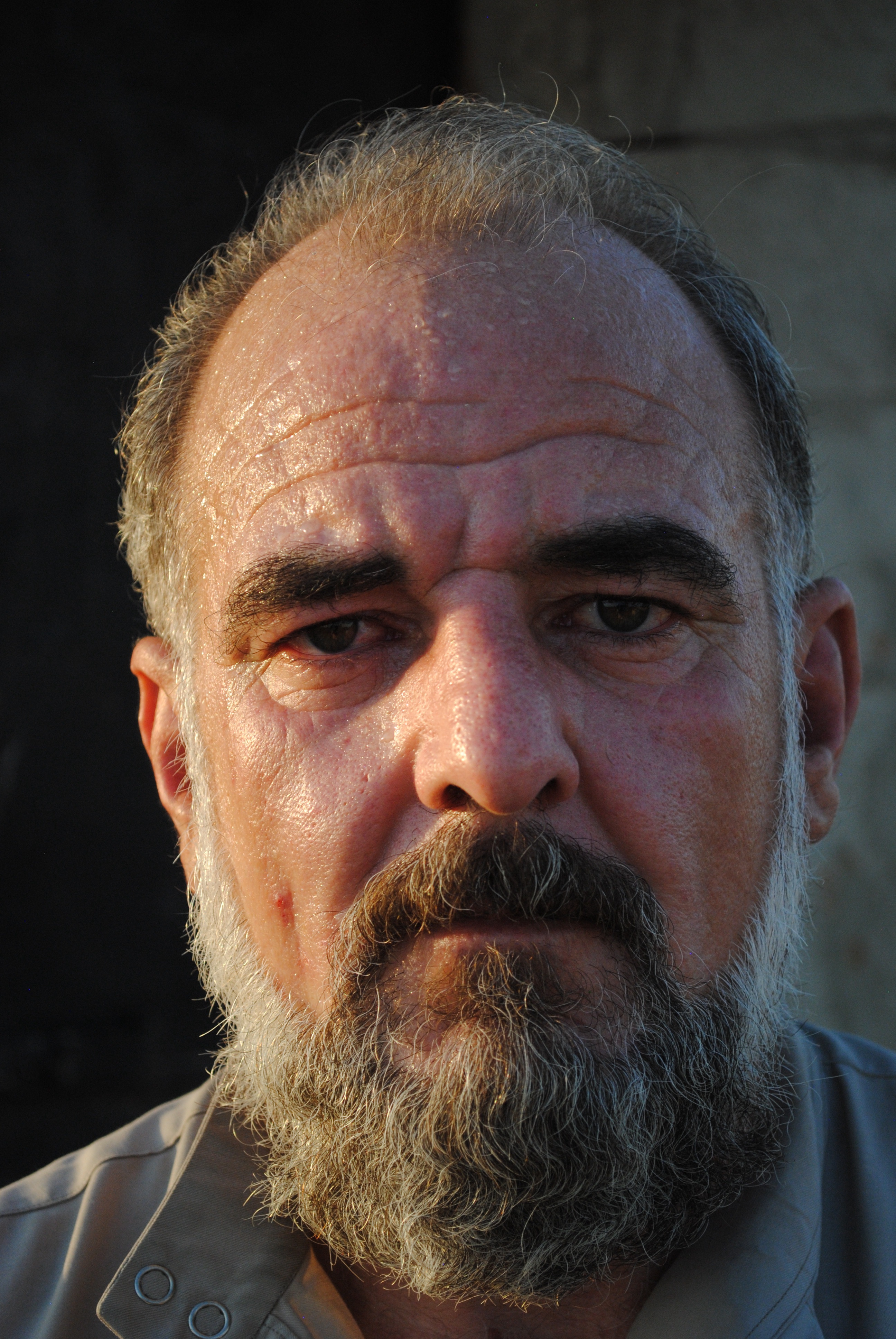
Mohamed Aqad, 65, hands me a glass of cardamom-infused tea, lights another Marlboro Red and sits back in his plastic chair. Ensconced in his handicraft shop in Aleppo’s souk, he’s in no rush. ‘Time stopped 15 years ago,’ he says.
‘When I was a boy in this area, all the shops would sell spices – cumin, cinnamon, black pepper, white pepper – also pistachios, chestnuts, desiccated coconut,’ Aqad says. ‘It was full of life.’
The souk is Mohamed Aqad’s life. He has worked there since the 1960s. But in August 2012, Aleppo became a battleground between regime and opposition forces. Like everyone else, Mohamed had to avoid the medina. A month later, he tried to return to his shop. Reaching his destination, he found two dead bodies on the ground. They were shot by regime snipers installed at the citadel. He hurried home, counting 18 bodies on the way. ‘I felt so afraid,’ he says. ‘I couldn’t come back again. I didn’t want to lose my life for my shop.’
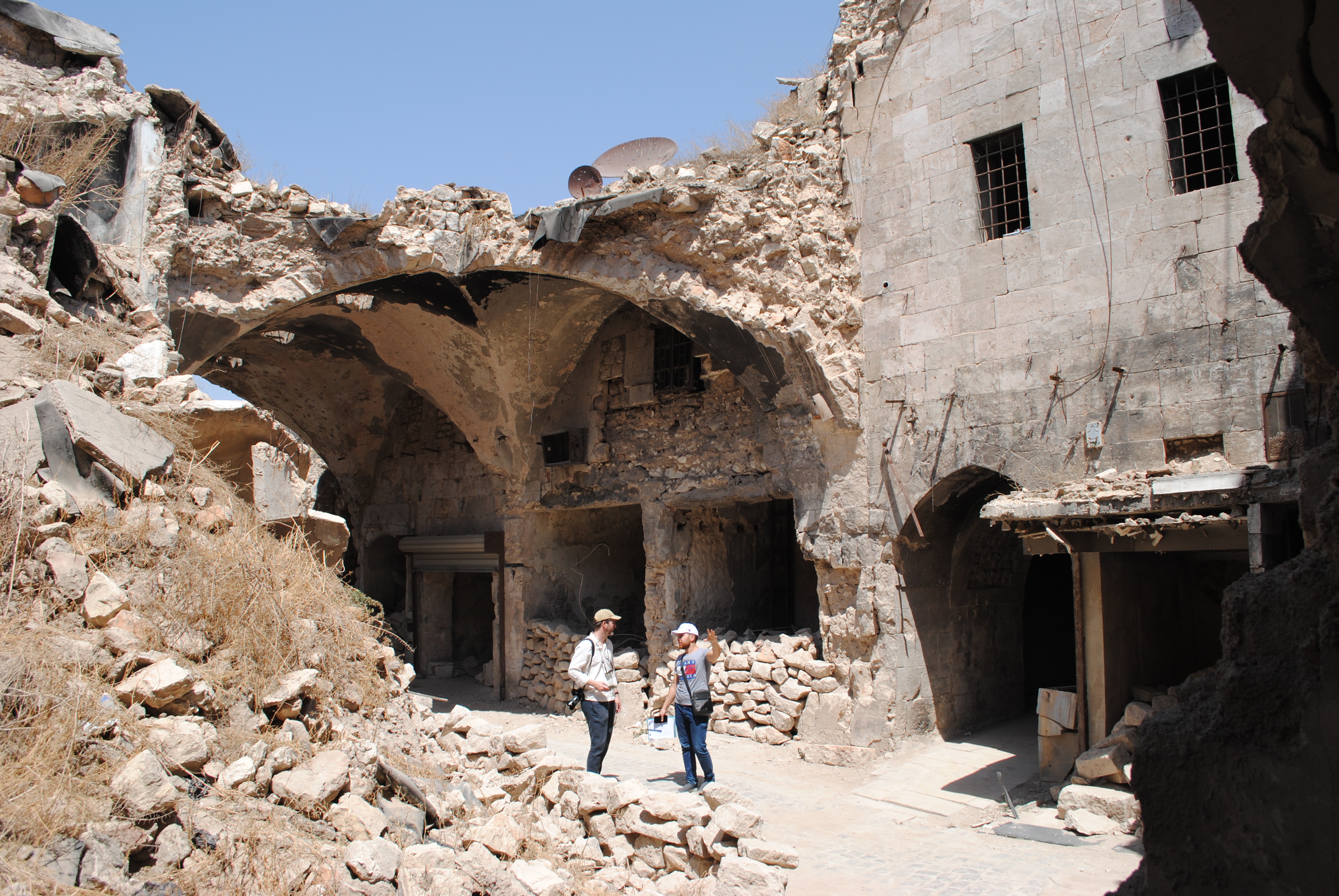
The war in Syria nearly destroyed Aleppo’s medina. The debris, blackened buildings and pock-marked walls reveal the physical damage this World Heritage Site has suffered. I can only imagine the conflict’s emotional scars. But life must go on. Restoration projects are underway. The sense of juxtaposition between the past and future is dizzying.
I visited Aleppo’s old city once before, in 2003. It was wonderful: a maze of covered streets and vaulted arcades hosting thousands of cavernous shops selling everything from pomegranates, fresh ricotta, mutton with entrails dangling on display, to gold jewellery, kilims, textiles and dresses. Donkeys would trot along paved alleys carrying sacks of fresh mint. There were mosques, madrassahs, hammams and cafés where old men played backgammon, nursing hookah pipes.
What was then a fluid circuit of labyrinthine passages is now broken. Today, a third of the medina lies in monochrome: a tableau of grey stones piled up against walls charred by the fire which funnelled through the souks in September 2012 – the result of shelling and gunfire between government forces and opposition rebels. The Khan al-Olabeyya, for example, an area of the medina containing medieval palaces (hosting the Italian merchant Marcopoli family), caravanserai and covered souks is now rubble and dust, the size of four football pitches, exposed to the sky.
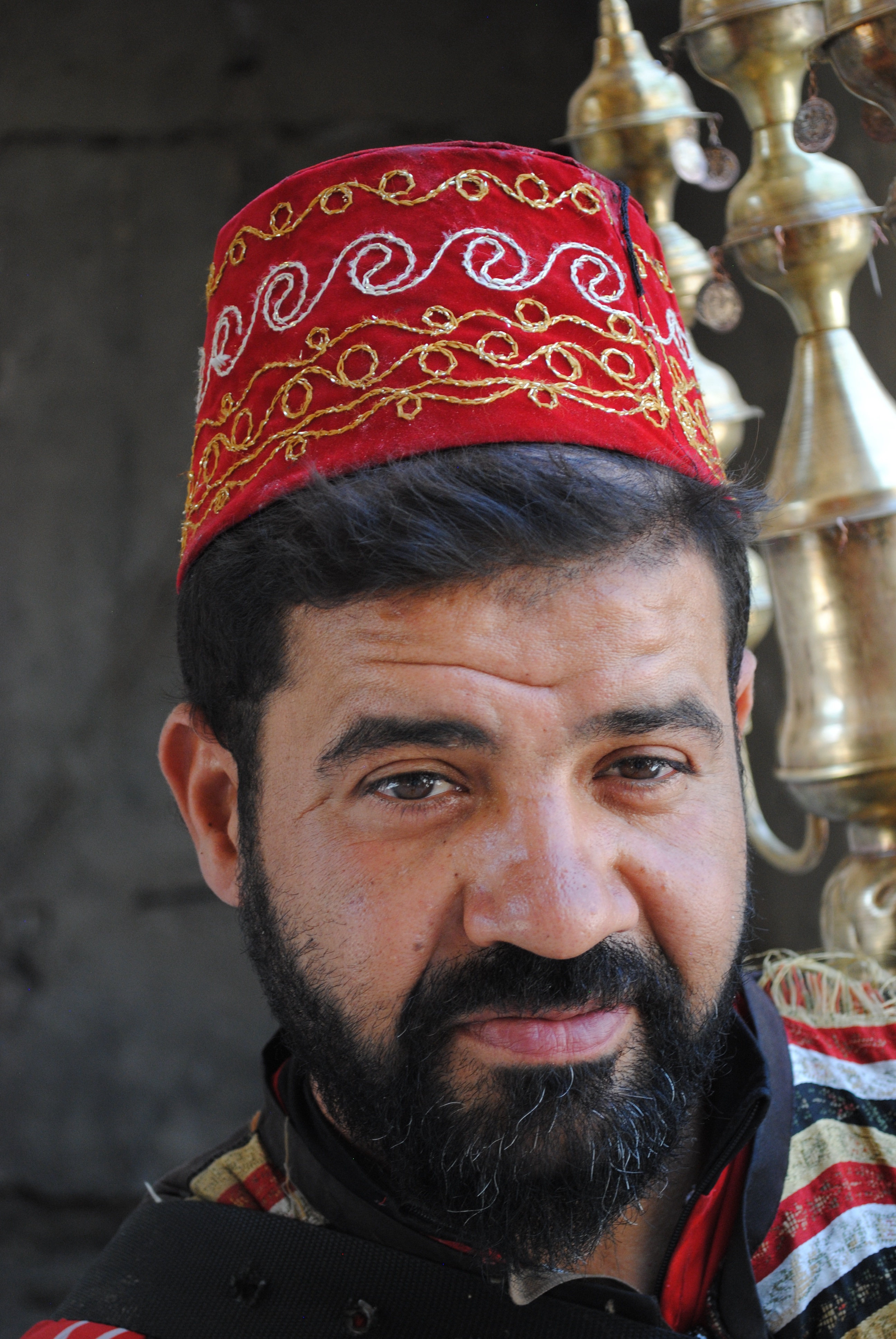
While I stand there, surveying the scene, an Erk Sous vendor appears, tapping his metal cups, creating a loud percussive jingle. He offers me some liquorice juice. The brown liquid is bubbly from the long pour. It tastes cool, sweet and bitter. With his red, embroidered fez and waistcoat, replete with giant brass vessel, he brings colour, levity and a touch of the surreal to this desolate space.
Liquorice was likely imported from Egypt thousands of years ago. Trade was the making of Aleppo, whose origins stretch back to the Neolithic period. Situated on the western flank of the Fertile Crescent, between the mediterranean sea and the Euphrates River, it later became a hub along the Silk Road, connecting the Fertile Crescent with China and Europe.
The Madrassa al-Halawiyah, in the al-Jalloum souk, reflects Aleppo’s many layers of history. After Alexander the Great arrived, during the Hellenistic period, it was a temple. In the Byzantine era, it became the Cathedral of Saint Helena. Then in the 12th century CE, during the crusader siege, Ibn al-Khashan converted the building into the Mosque of the Saddlemakers. Inside, the first thing I notice are its Corinthian columns. Then the cupola, darkened by smoke. Today, it survives the war, just. Major restoration work is needed.
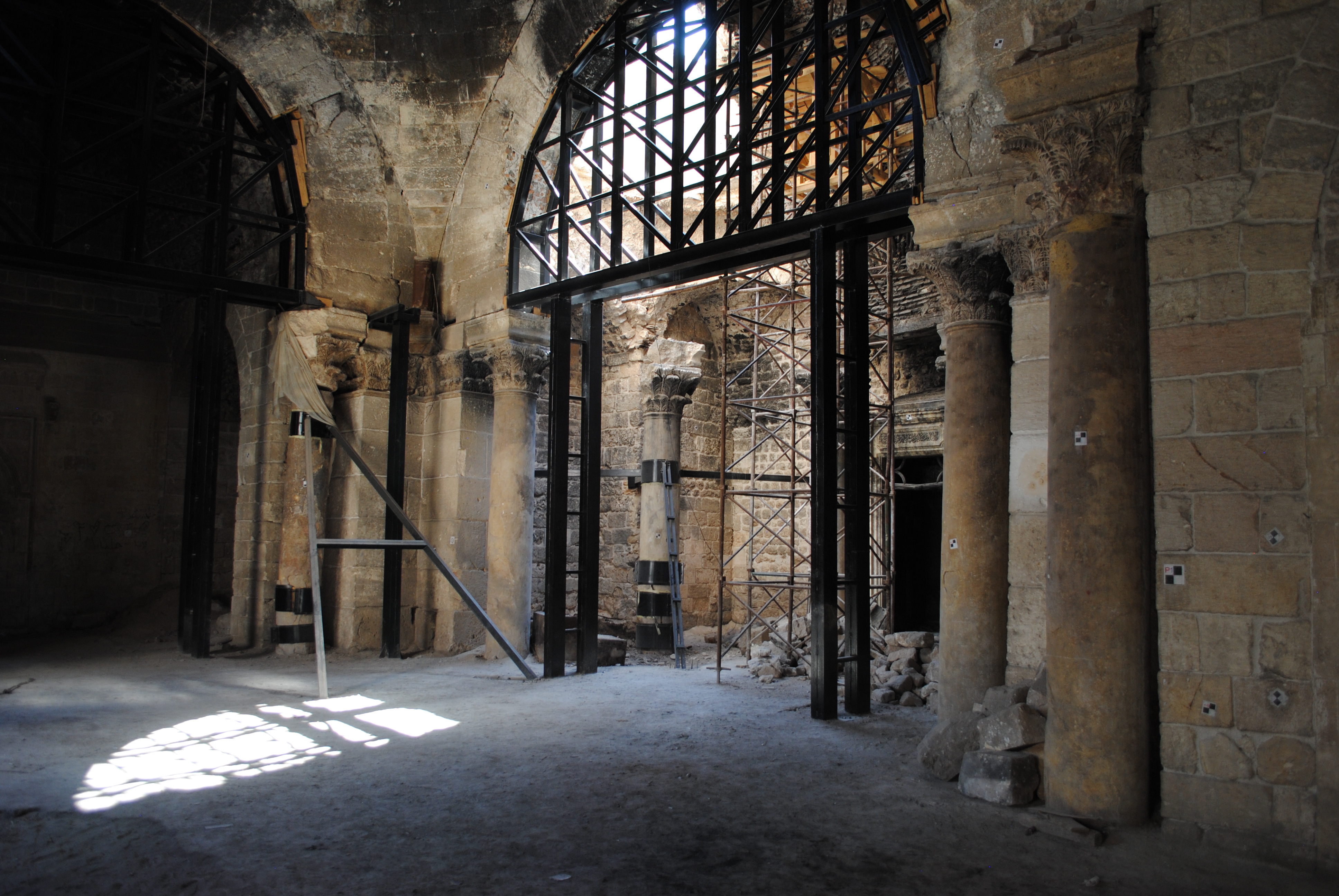
Fortunately, the new Syrian government and international organisations are restoring elements of Aleppo’s old town. In 2025, the new government began installing water pipes as well as new lighting around the Citadel. The Municipality of Aleppo and the Directorate-General for Antiquities and Museums are also active in rehabilitating parts of the historic centre, including the Citadel and Grand Umayyad Mosque.
Ali Hamedi, 36, is hammering a steel chisel into a wall on the first floor of the Khan el-Sabun, a district in the medina where Aleppo’s famous soap was once manufactured and sold. He is remodelling some archways that look down onto a courtyard. Hamedi’s work is part of the Aga Khan Trust for Culture’s (AKTC) restoration programme, which supports the government’s broader efforts. As we speak, Ali shows me a shahuta, an ancient tool still deployed today. It renders stone flush, yet its steel incisors leave little striations across the surface.
‘Working here is fascinating,’ says Hamedi. ‘Everything in the old city has a soul. It is alive. I’m connecting with people from the past.’ Since 2018, AKTC has repaired eight key areas of the medieval souk, with more rehabilitation planned. Other international organisations such as UNESCO, UN-HABITAT and UNDP have also been involved in efforts to restore the city’s historic centre.
On my final evening, I meet a group of Aleppians in the Beit Achiqbash, an ornate former residence in the Christian al-Jdayde neighbourhood. Under the stewardship of trainers, 40 purposeful conservationists move around an extravagant 18th-century Mamluki-Rococo courtyard, applying digital engineering tools like Total Station. Under this Junior Chamber International project, these young architects and engineers are using technology to re-imagine building designs and restore their city’s architectural heritage.
Beyond the construction work, though, I reflect on the traumas that Aleppo’s residents must repair. ‘The souk holds a lot of memories for Aleppian people,’ says Ammad Qaynouz. He had to vacate his father’s spice shop during the war. Coming back, he says, has helped him recall his happier memories before the conflict. The shop sells medicinal herbs and natural remedies. As such, it is healing not just the bodies of its customers, but also Qaynouz’s mind.
Another trader, Rahaf Houri, 33, describes the stress and anxiety she felt during the fighting. Her brother was killed by a sniper. She says she can barely remember anything before the war. But the vibrancy within the souk is helping her to recover. ‘There’s a lot of positive energy,’ she says. ‘Every day it feels better to be here.’
Rahaf’s shop is in the souk al-Hibal, one of the restored parts of the medina. These covered streets with new shops are immaculate. You can smell the paint and plaster. There is some dissonance, aesthetically, with the ancient walls elsewhere. This sense, I reflect, is also metaphysical: for merchants like Houri, as well as the returning customers, it will take time to fully ‘land’ within Aleppo’s post-war reality. But a feeling of cautious optimism is everywhere.
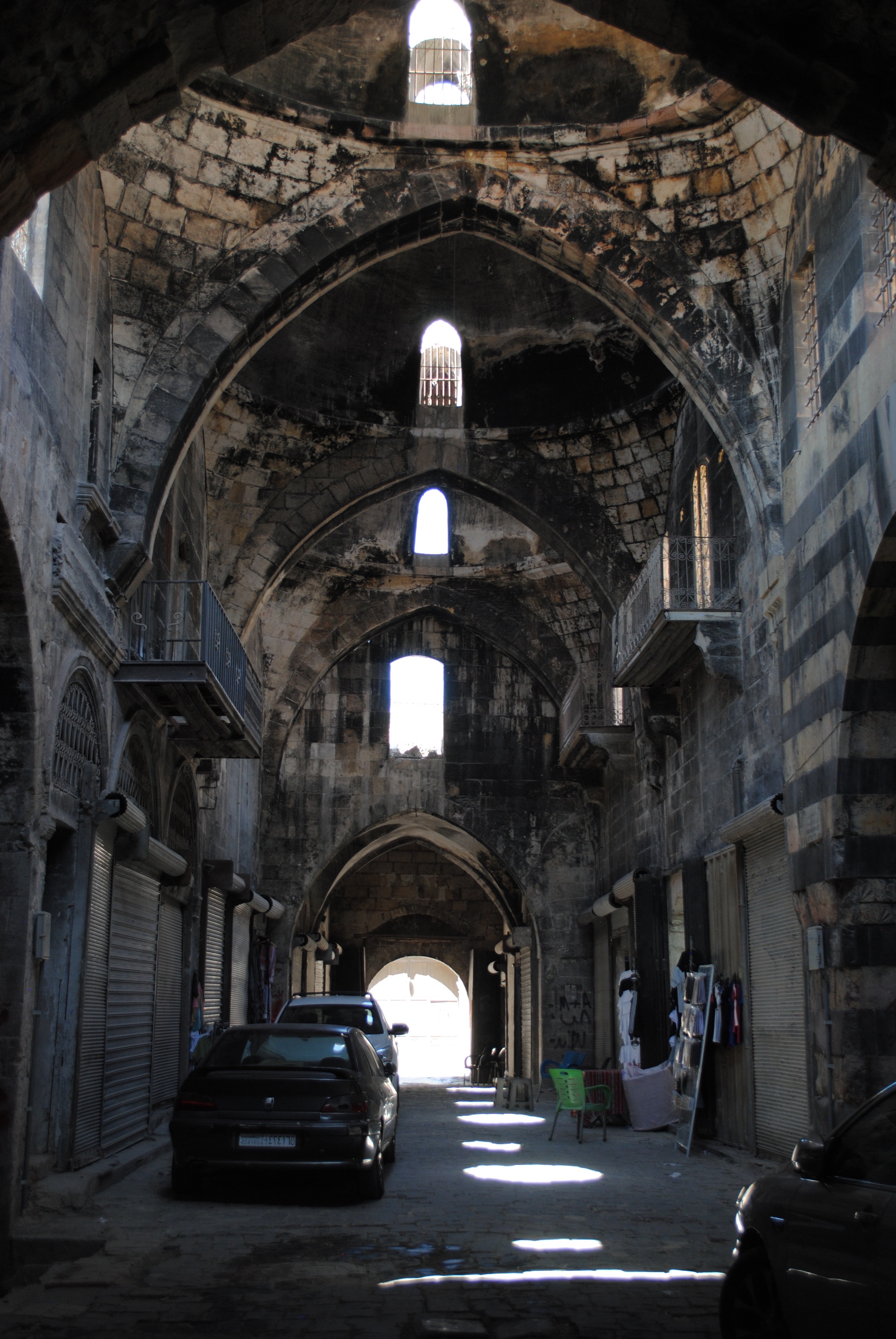
On my final morning in Aleppo, I walk into the souk for the last time. There are just a few shopkeepers opening their shutters. I can hear dovecotes warbling in the vaulted dome above me. There’s a voice reverberating. It sounds disembodied, ghostly. There are spirits in these streets. Lives, buildings, memories – they are formed and lost and revived in the old souks of Aleppo.

 harryjohnstone