Hunger Shames

A comparative book review:

THE END OF PLENTY – The race to feed a crowded world, by Joel K. Bourne

THE REPROACH OF HUNGER – Food, justice, and money in the twenty-first century, by David Rieff

Joel K. Bourne considers a world seemingly destined for even more hungry people. The planet’s human population is expected to reach 9 billion by 2050. Food production increases are barely able to match population increases. Food stocks are diminishing. The extraordinary growth of food production brought about by the “Green Revolution” since the 1960s is now levelling out due to soil nutrient depletion, a result of the intensive farming that was deemed necessary to address unprecedented global population growth. The increasing consumption of meat and dairy products, which requires and releases more carbon dioxide to produce, is exacerbating climate change. Climate change is already reducing production for farmers throughout the world.

It makes for scary reading. Bourne is happy to furnish our fears. He writes, “The world’s farmers face a . . . Herculean, task: to double grain, meat, and biofuel production on fewer acres with fewer farmers, less water, higher temperatures and more frequent droughts, floods and heat waves. And they must do it without destroying the forests, oceans, soils, pollinators, or climate on which all life depends. It is the biggest collective hurdle humanity has ever faced”. Later he adds,  “we’re on a roller coaster that has just left the tracks”.

This catastrophic scenario is relieved somewhat by the book’s narrative structure. Bourne eases our worries with stories of ingenious and personable farmers doing their bit to help themselves and, implicitly, humanity.

Bourne has a passion for seeds and soil. He admires people working the land, none more so than the father of the “Green Revolution”, Norman Borlaug. He describes an “iconic” image of Borlaug in a Mexican field in 1964: “His shirtsleeves are rolled high, revealing a brawny, sun-darkened right arm that scribbles in a large notebook . . . his eyes steeled on the wheat field in front of him, judging its height, vigor and yield.” Borlaug is one of many heroic figures in this story. Other hopeful characters include: a maverick American aquaculturist off the coast of Panama, an Ivy League microirrigation engineer launching his start-up in India, and corporate farmers in Ukraine looking to exploit the potential of Europe’s breadbasket.

The End of Plenty is both readable and compelling as a series of largely apolitical tales of farmers’ challenges and triumphs set against the wider environmental context.

Yet The End of Plenty does not go far enough, both in terms of analysis or prescription. As its subtitle states, this book is about “the race to feed a crowded world”. But Bourne sees the problem of hunger narrowly, as largely one of food supply, and suggests answers mainly in agricultural innovation alone.

This tendency to see the solution to global hunger through “innovative” agricultural development is the view of the “mainstream”, as David Rieff makes clear in The Reproach of Hunger: Food, justice, and money in the twenty-first century. The mainstream comprises all the major players apparently aiming to tackle hunger: the United Nations, bilateral aid agencies such as USAID and DFID, the Bill and Melinda Gates Foundation, Jeffrey Sachs, the World Bank, international NGOs and even agro-industrial multinationals. Reiff argues that they share a misguided “faith” that hunger can be eradicated – for that is their aim – through “smart aid”, scientific innovation and “best practices” drawn from the private sector.

Rieff correctly asserts that this mainstream development consensus represents an ideology that simplifies the causes of hunger and underestimates the scale of the changes required to tackle it. He argues that “hope has become the default of our age, and realism . . . is now widely considered to be a moral solecism and almost a betrayal of what it should mean to be a compassionate human being.” He laments this status quo, “in which good intentions are too often conflated with good deeds and good deeds with effective ones”. He deplores “an age where it is a fact and not an opinion that inequality is deepening across the world, that power and wealth are more and more concentrated in the hands of the tiny minority of the world’s population, and that politics even in democratic countries is increasingly unresponsive”. He concludes that “all this talk about individuals making a difference [is] at best a consoling farce”.

The Reproach of Hunger is a long, rambling book filled with long, rambling sentences. But Rieff’s insight on the illusory quality of the development consensus is important. As is his assertion that hunger is fundamentally a political problem, not a technical one. But Rieff, like Bourne, fails to offer an alternative. His overriding scepticism precludes it. Disconsolate, he agrees with the philosopher John Gray that the “emancipation of market forces from social and political control” represents the only revolution currently underway.

These books – one fearful, the other despairing – offer divergent visions of the challenges we face in feeding the “bottom billion”. Bourne fears we may not produce enough food considering existing farming methods, population growth and the effects of climate change, while Rieff doubts that “philanthrocapitalism” – the present approach – offers a real solution. Yet they struggle with the same binary: either working with, or against, capitalism. Neither ventures a credible political alternative.

Alternatives do exist, however. As with water, we must defend the aim of “enough food for all” from the vicissitudes of market economics. As a norm and an ideal, ending hunger should be a cross-party political goal. This should be safeguarded legally, by enshrining rights within all state constitutions. Governments that breach their citizens’ “right to food” should be liable.
 

The Times Literary Supplement


Mali’s Prospects for Peace

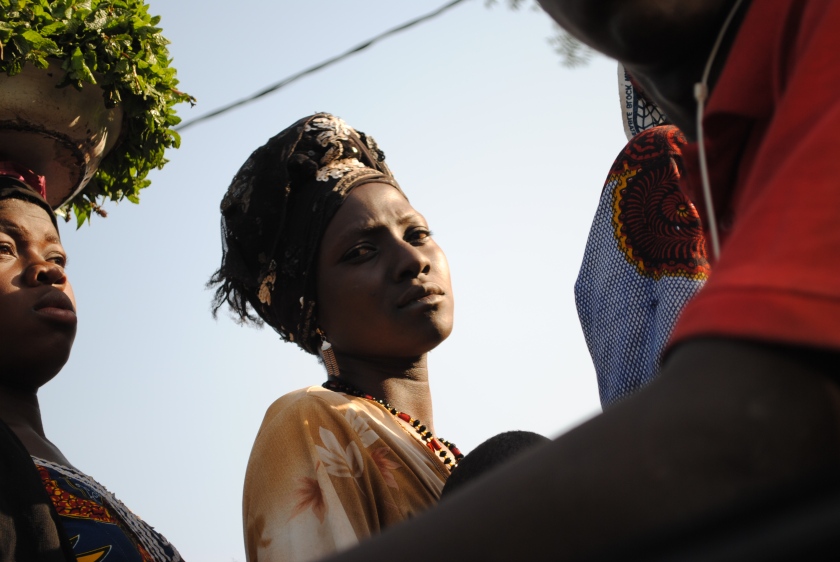
Bamako woman.jpg

The attack on the Radisson Blu hotel in Bamako on 20 November was symptomatic of Mali’s protracted social conflict. Twenty-one people were killed during the day-long siege, including the two jihadists from Al-Mourabitoun, one of several radical Muslim factions operating in the north of the country. A recurring conflict between northern Tuareg actors and the government has also plagued Mali since it gained independence in 1960. In 2012, the ‘fifth Tuareg uprising’ and almost simultaneous jihadist attacks broke out across the north, expelling government forces from Timbuktu, Kidal and Gao regions. These parallel movements threatened Mali’s state sovereignty, prompting French military and UN peacekeeping interventions as well as an internationally mediated peace process. Three years later, it remains to be seen whether lasting peace can be achieved in Mali.

In the short term, successive French military interventions Serval and Barkhane have weakened northern radical Islamic militant groups such as Ansar Dine, which led the 2012 jihad, and al-Qaeda in the Islamic Maghreb (AQIM). The French army recently reported that between July 2014 and 2015 Operation Barkhane had removed 125 terrorists from Mali and seized 20 tonnes of munitions. The UN peacekeeping force (MINUSMA) has also helped to stabilise the conflict, despite recently becoming the fourth-deadliest mission in the history of the blue helmets. In addition, Mali’s neighbouring states coordinate to tackle security challenges as part of the Nouakchott Process, which started in late 2014. These initiatives have de-escalated the conflict for now.

The peace process has also made some advances in conflict transformation between 2014 and 2015. The large number of northern armed actors were united in their hostility towards a Malian state they saw as exclusionary and corrupt, but splintered over goals and methods. By July 2014, the mediation team, led by Algeria, had successfully coalesced the actors into two coalitions – the more statist, government-leaning Platform, and the more secessionist Coordination des mouvements de l’Azawad(known as ‘Coordination’) – which became compliant within a political process. By the time the Coordination signed the ‘Algiers Accord’ on 20 June 2015, the process had achieved notable compromises among parties. For example, the Coordination dropped its goal of a separate ‘Azawad’ territory and agreed to back a single, secular Malian state. The government also shifted its position, agreeing to the official use of the name ‘Azawad’ for the northeastern region, and several additional political concessions.

Significantly, the Accord offers considerable devolution to northern Tuareg populations represented by the Coordination. It also promises economic investment in the north, which both the Platform and the Coordination desire. Meanwhile, both northern factions have agreed to disarmament, demobilisation, reintegration and reinsertion (DDRR), including merging some elements into the national security forces. Socially, the Truth, Justice and Reconciliation Committee, which aims to investigate violence and abuses committed in the country during 1960–2013, is an important step towards fostering a culture of reconciliation.

The peace deal also generated a positive international response, with France pledging €360 million in reconstruction assistance on 21 October. The following day the Organisation for Economic Co-operation and Development (OECD) hosted an international conference on Mali, to solicit further investment from the public and private sectors. The meeting concluded by stating that Mali requires some €3.5 billion in humanitarian and development assistance during the next six years.

All of these initiatives are de-escalating conflict in Mali. But the question remains whether they are actually transforming the conflict. Three developments in 2015 would suggest not. Firstly, the Coordination refused to sign the Algiers Accord when the Platform did so in March, because, among other unmet aspirations, the group rejected the proposed security arrangements. This rejection was almost certainly based on concerns that its forces would not be stationed optimally when ‘guarding’ northern roads. Secondly, both the Platform and the Coordination broke the ceasefire agreement, central to the Accord, several times between May and September, halting the implementation of the peace deal. Each breach was a result of armed elements moving into ‘forbidden’ territories in the northern regions. Their objective, again, was to claim key strategic roads when, through the Accord, they would soon be entrusted to ‘police’ them. This manoeuvring led to several clashes, the last of which, on 17 September, resulted in 15 fatalities. Following this ‘mutually hurting stalemate’, the third key event was a three-week long meeting in Anefis between the Platform and the Coordination, which ended in mid-October with a deal to end hostilities. According to reports, this so-called ‘pact of honour’ again centred around cantonments along the northern roads.

Both parties’ concerns over the control of roads in the north is explained by the prevalence of smuggling in the area. Illicit trade across Mali’s northern border has grown since the 1970s – from cigarettes, to cannabis, to cocaine, heroin, arms and human beings – and has become a vital source of revenue for northern communities. Controlling roads heading into Algeria guarantees vital income through bribery and kickbacks. A worrying associated trend has been kidnapping, particularly by terrorist networks seeking cash for the release of hostages.

The fact that so much of the peace process has, in effect, hinged on control over trafficking routes reveals two key insights: firstly, that criminality and corruption is endemic both in the north, but also reputedly in Bamako, massively undermining Mali’s long-term governance and security. Secondly, that people engaged in such activities seek this income for themselves and their communities, revealing the persistent poverty and deprivation of the north, which is still resource-poor and economically marginalised. As Paul Collier has forcefully argued, this kind of poverty is a key driver of conflict. Both insights suggest that the structurally rooted nature of conflict in Mali persists, despite efforts at delivering peace.

For real conflict transformation in Mali to occur, northern criminality needs to be tackled by force, but also through strengthened governance and rule of law. Broader recognition of the problem is necessary: Mali’s diplomatic community still treats cross-border trafficking as a taboo; radical ‘Islamists’ or tribal dynamics are instead seen as the key drivers of conflict. The Nouakchott Declaration refers to transnational trafficking networks merely in passing. Donors should force Bamako to tackle the issue by disinvesting, for example, when trafficking indicators are triggered. The UN Office for Drugs and Crime (UNODC) remains weak in Mali. International organisations must be capable of confronting corruption at the central level.

But in parallel with such efforts, the international community must support the government in promoting legitimate forms of income to replace this criminal economy. France’s financial pledge is undoubtedly important, but it remains a ‘pledge’, only €80 million of which was dedicated to the north. The government must honour its commitments, enshrined in the Algiers Accord, to northern political and economic integration. Moreover, the international community must incentivise this assimilation into the national economy by promoting existing assets, like tourism, and identifying alternate revenue streams. In this way, the northern groups can be legitimately empowered, in conflict analysis terms, so as to be able to negotiate effectively with the government within an ongoing political process.

As long as trafficking and criminality are allowed to continue, and no viable alternative exists, then this war economy will prevail throughout northern Mali. In this context, armed actors will continue to rise against the state. And jihadi ‘spoilers’ will continue to kidnap and kill, as they did in Bamako on 20 November. As such, Mali’s prospects for peace remain worryingly remote.

International Institute for Strategic Studies


The Tyranny of Experts

“It is time at last for the debate that never happened to happen. It is time at last for the silence on unequal rights for rich and poor to end. It is time at last for all men and women to be equally free.” Thus ends The Tyranny of Experts, William Easterley’s latest insightful book about international development.

Since the early 20th century, and after World War II, argues Easterley, the architects and managers of international aid – governments and “experts” – have unanimously favoured an apolitical approach to development that attempts to achieve economic growth through centralized, technocratic means.

Through this “blank slate” vision of development these “experts” have neglected the rights of poor people. As a result, they have actually undermined poor people’s prospects for greater material wealth over the long term. Easterley suggests that the racist colonial belief in poor people’s inability to think for themselves is sustained through mainstream development practice today.

The Tyranny of Experts draws heavily on the ideas of 20th century Nobel prize-winning economist and philosopher Friedrich Hayek. One of Hayek’s most popular books, The Road to Serfdom, challenged the wisdom of top-down central planning. Easterley takes his cue, arguing that development should be achieved via what Hayek described as “spontaneous order” rather than the “conscious design” favoured by Hayek’s contemporary, Gunnar Myrdal, and successive generations of development economists.

Easterley invokes Adam Smith’s notion of the ‘invisible hand’ of the market to illustrate how individuals seek opportunities within complex systems when incentives exist. Easterley wants the “experts” to focus more on creating these incentives by pushing for poor people to be granted their political and economic rights. These rights are intrinsically good, he argues, plus they help individuals pursue the market opportunities that will ultimately lead to national growth. He uses the phenomenal success of South Korean car giant, Hyundai, founded by Chung Ju Yung, to make his point.

Unfortunately, the latter half of the book is problematic. Easterley uses too many threads of research simultaneously, including a continuous reference to the history of Greene Street, New York, as a weakly conceived example of how “spontaneous solutions” triumph over central planning.

Though it loses some coherence, The Tyranny of Experts nonetheless compels us to re-examine the purpose and methods of international aid.

Globalization And Its Discontents

I have just read Joseph Stiglitz’s Globalization and Its Discontents (2002).

Stiglitz was the Chief Economist at the World Bank and Chairman of President Clinton’s Council for Economic Advisors. He won the Nobel prize for Economics in 2001.

He has formidable expertise and experience and has succeeded in writing a book about economics that is both readable and compelling.

His basic argument runs that the International Monetary Fund (IMF), the international economic institution responsible for supporting countries facing economic crisis, was largely responsible for the failure of globalization in the 1990s.

The IMF, states Stiglitz, continuously adopted an out-dated and dogmatic adherence to market fundamentalism – the belief in letting the free market deliver economic stability and growth. Their policy to achieve this, in East Asia and Russia, was incoherent and went against the basic tenets of Keynesian economics.

The IMF’s failed policy prescriptions included fiscal austerity, high interest rates, rapid trade liberalization, liberalizing capital markets and privatization.The IMF’s institutional “fear of default” also comes in for criticism.

I enjoyed this book though I found the focus a little too narrow; it rarely deviates from its specific critique of the IMF. Surely other players should come into consideration if you intend to address the failings of a phenomenon as broad as globalization? Only the World Trade Organization, the U.S. Government and the World Bank, are addressed in this context.

The “behind the scenes” actions of corporations and foreign governments in influencing policy are ignored. Here Stiglitz misses an important trick. I would also have liked to see more analysis of how poor economic decisions directly affected people in these developing countries; the repercussions of, for example, liberalization policies were often enumerated only very vaguely.

Stiglitz undoubtedly succeeds in revealing the impudence and irresponsibility of the IMF’s interventions in developing countries. But I wonder how else it could operate? The “international bureaucrats” to which he so often refers must work according to very tight timelines. Sometimes these seemingly mundane factors help to explain their lack of flexibility or foresight.

But it’s nevertheless shocking to learn how much the IMF is governed by the narrow interests of the Western financial community, whose investments are recouped via the multi-billion dollar cash injections into these developing economies, while their poor lose their jobs and livelihoods and the middle classes foot the tax bill that ensues.

Stuffed and Starved

I have just finished reading Raj Patel’s ‘Stuffed & Starved’ (1st edition, 2008). In this brilliant polemic, he addresses most of the key factors underpinning the world food system.

Patel argues convincingly that the large food corporations are socially pernicious. His range is of research is really impressive. I also liked the tone he uses; he never speaks from a position of authority. He uses vignettes to paint the bigger picture. He lets others talk. And some of his ideas and insights are so illuminating.

Though Patel  seems to steer clear of any major political or structural analysis. Government policies and the role of global governance institutions, outside of the WTO, are barely addressed.  I got the impression that Patel implies that it is these corporations who are responsible for the ‘starved’; that they are leaving populations destitute. I would have liked a clearer argument on food security here. I think the responsibility for food security lies more with the governments within these countries than foreign corporations. But the role of government lies largely outside of Patel’s narrative.

In any case, this is, as Naomi Klein described it, a “dazzling” book and well worth a read.

Feeding Frenzy

“Can we feed a world of 9 billion by 2050? Is the current market turmoil an early sign that the global food system will not cope?” These are the questions that Paul McMahon seeks to answer in his highly readable book, Feeding Frenzy. Written in short, clear sentences and rarely lapsing into jargon, McMahon succeeds brilliantly in describing the food supply challenges we currently face.

Feeding Frenzy’s opening chapter gives us a succinct history of food from 10,000 years ago to the present day. The rest of the book covers the key threats to ‘food security’, such as population growth, finite food resources, the growing use of biofuels, climate change, unstable markets and self-serving traders, all of which saw food prices spike in 2008, causing a global food crisis, with riots flaring across the developing world.


Feeding Frenzy also looks at the macroeconomic obstacles; the fact that today many developing countries import most of their food, rendering them vulnerable to price rises. Two later chapters outline multinational commodity corporations’ scramble to secure ‘supply chains’, as well as food-importing governments’ efforts (through sponsored companies) to acquire land, in so-called ‘land grabs’. These moves see commercial actors seize control of supplies, with the dangerous potential to engineer price rises, while the ‘grabs’ undertaken by state bodies may insulate their domestic consumers from wider market volatility, but they also restrict global supplies, thus threatening food security in other countries.

McMahon gives a clear overview of these scenarios and sets out the essential steps which, he argues, must be taken: free trade in global commodity markets; enabling small farmers in poor countries to grow more food; agro-ecological approaches to farming (such as Henri de Laulanie’s rice-farming intensification system, applied in Madagascar and now adopted in forty countries worldwide); and the restructuring of markets to support food security over commercial gains.

Feeding Frenzy is really a rebuttal of those alarmists who believe we are failing to meet growing demand with adequate supply. McMahon argues convincingly that we have the natural resources to produce enough food to feed our richer, more populous and climatically varied world by 2050; we just need to rationalize our food supply systems.


Times Literary Supplement


Ethiopia: The Last Two Frontiers

John Markakis’s latest book, ‘Ethiopia: The last two frontiers’, presents a political history of Ethiopia covering the period 1916 to 2010. Focusing on the transformation of a multicultural empire into a modern nation state, Markakis continuously leans on the “centre/periphery” dynamic as a method of analysis. In the vein of subaltern studies, he seeks to give agency to “peripheral” peoples in the state-building process.  Using a vast range of historical, political and anthropological sources, Markakis describes Ethiopia’s northern and central regions as comprising the “centre”. The “last two frontiers” are the two peripheries: the “highland periphery”, essentially the Oromo-dominated southern highlands, and the “lowland periphery”, inhabited by the Oromo but also by major pastoralist groups such as the Afar and the Somali, as well many other smaller ethnic groups.

Split into five parts, the book begins with a discussion of the main peripheral peoples, followed by a history of the modern Ethiopian empire from the nineteenth to the twentieth century, under Emperors Menelik II (1844–1913) and Haile Selassie (1916–74). During this period, Amharic became the lingua franca, excluding non-speakers from power. Both highland and lowland peripheries were subjugated: exploited for labour, taxes and tribute. Markakis then assesses the period of Dergue rule after the deposition of Haile Selassie, in 1974, in which the Marxist dictator Mengistu Haile Mariam succeeded in expanding the state apparatus until his overthrow in 1991. The fourth part describes how the Tigray People’s Liberation Front (TPLF), led by Meles Zenawi, sought a state and national identity that would encapsulate Ethiopia’s diversity, empowering the three-quarters of the population that were not Amhara. Subsequently re-formed into the Ethiopian People’s Revolutionary Democratic Front (EPRDF), their brand of government has blended leftist nationalist ideology with a pragmatic drive to commercialize agriculture in the south. The final part of the book assesses the impacts of federalism on the diverse ethnic groups populating the southern regions.

Markakis believes the EPRDF has overseen an expansion of the state, with more schools and hospitals established in previously neglected regions. Pluralism has been feted. But beyond basic services and symbolic gestures, he argues, the “regime” has kept a “tight reign” and is “lacking in imagination” when it comes to offering real political power to peripheral regions.

‘Ethiopia: The last two frontiers’ reflects Markakis’s immense knowledge and passion for Ethiopia. Although the tone, structure and style could be lighter, readers will nevertheless find much worth in this expansive and original study.


Times Literary Supplement

Interventions – A Life in War and Peace

Kofi Annan’s memoirs narrate his career as a flying peacemaker, working for the United Nations. Interventions: A Life in War and Peace, takes us from one diplomatic precipice to the next. We traverse devastating failures and lasting successes. In the book’s chaotic world, Annan’s unwavering determination and moral conviction is perhaps the one constant.

Interventions is written by Annan with Nader Mousavizadeh, an ex-colleague, and focuses mostly on his efforts to prevent or resolve global conflict. After an opening chapter on his youth, observing the successful independence movement of Ghana’s first President, Kwame Nkrumah, and engaging in student politics, we then jump to his career, as head of the UN’s peacekeeping operation, followed by his ten years as Secretary General.

Chapters primarily cover the interventions in all forms of war since the early 1990s. Specific innovations such as the Responsibility to Protect doctrine, the International Criminal Court and the Millennium Development Goals (MDGs) are upheld. UN reform is explained, and UN resolutions are never far away.

The book could be more balanced, addressing Rwanda, Iraq and Afghanistan more, and Israel-Palestine a little less. It could also capture the rich detail of high-level political summits with more verve; at times the content is dry and excessively policy-orientated. Occasionally the language strays into latinate prose: “The impact of the MDGs in providing this coherence has not just secured the de-confliction of certain development paradigms…”

Despite these flaws in style, Interventions engages assiduously with key topics. Annan does not shy away from criticizing the Bush administration for undermining multilateralism over the Iraq war. He is right to point out that in development debates “the spotlight should not be on aid but trade. It should really be on the failures of rich countries to remove international trade regulations that stunt the economic ambitions of developing countries.”

Interventions really comes alive when we read about Annan’s efforts to work alongside difficult personalities such as the former Palestinian leader Yasser Arafat. These passages reflect Annan’s sensitivity and steeliness, as well as his sense for human psychology. The book’s substance lies somewhere between the personal and the policy-driven – more of the former would have made it more readable, but nevertheless it remains a fascinating account of contemporary statecraft in the post-Cold War era.


Times Literary Supplement

The Real Transition That Afghanistan Needs

The Afghan guessing game is intensifying. Nobody can accurately predict what will happen in 2014 – the “transition” year – when international ground forces finally exit and a new Afghan president is elected. Pessimists foresee the outbreak of civil war and a rise in the number of safe havens used by international terrorists. This current rise in attacks, assassinations and abductions around the country will increase their anxiety.

May’s Nato conference in Chicago saw world leaders promise more cash to bolster Afghanistan’s fledgling security services, but can we not learn from history and recognise that no matter how much money and lives are expended on military intervention and training, more soldiering and policing will not deliver long-term security.

Military force seeks to prevent insecurity but ignores its root causes. Afghanistan’s insurgencies find acceptance among the poorest, most marginalised communities. These are villages in remote districts that are neglected by government and aid agencies. As US General Eikenberry was fond of saying, “where the road ends, the Taliban begins”.  Roads are important, but providing quality services that vulnerable populations can reach is vital.

Afghanistan’s under-development remains shocking. One in two children under five is chronically malnourished. Nearly half of school age children are out of school. Around half the population is underemployed. Over a third of the country lives below the poverty line. In such precarious environments, religious extremism, narco-trafficking, criminality and corruption thrive, for survival is paramount.

Undeniably there have been achievements over the past ten years. Access to primary health care has increased from 8 percent of the population to more than 60 percent. Access to electricity has increased by 250 percent. The Afghan government has increased its ability to collect revenue. And, yes, thousands of kilometres of roads have been constructed. Donors, development partners and NGOs have played a critical role in supporting Kabul in these and other areas.

But the fact remains that, despite over ten years of enormous foreign investment in Afghanistan, the lives of ordinary Afghans have changed little. About 40,000 Afghans die each year due to poverty and hunger. This figure is fifteen times more than casualties from war. Yet NATO has spent more than twice as much on its intervention in one month than all the combined international aid spent on social protection in eight years.

2012-03-24 14.08.22

Investments in the basic building blocks – quality education, nutrition and rural livelihoods – have for too long been dismally low when compared with the vast sums disbursed on governance and more “visible” macro-economic projects deemed to be the “silver bullet” for Afghanistan’s future GDP.

The poorest Afghans have understandably grown disillusioned with the corruption among Kabul’s political elites when tax-payers’ money should be going towards improving people’s social services. These Afghans naturally start to view the international aid community as equally self-serving and hypocritical. No wonder then that they accept the alternatives that are pressed upon them by Islamist clerics and their foot soldiers.

Next week, Afghanistan’s stakeholders from the international community will meet in Tokyo to discuss development. This is a major conference and needs to be treated as such, not simply as another stop-off in the Afghan diplomatic carousel.  It presents a genuine opportunity for policymakers to shift the balance of power away from war-weary Generals to the Ministers, Ambassadors and senior UN officials who will be responsible for the country’s future development.

If the “transition” is a discursive tool, let us frame it this way: the following two years should see the international community transition from a security-dominated agenda to a development agenda. Critically, this agenda must prioritise the most vulnerable Afghans’ needs and focus on sustainability. The UN must become the major partner in supporting the government’s development strategy.

One thing is clear: the elephant in the room at Tokyo will be the abject lack of human development in Afghanistan; that is, the international community’s failure to help the country’s poorest. Everyone there will be aware of it, but few will have the courage to speak up and propose solutions.

When aid targets the right people directly, it can work. The National Solidarity Programme, funded by the US, UK, Canada and Denmark among others, has empowered communities across rural Afghanistan to spend US$1.2 billion on their own development priorities. This kind of development practice is helping hundreds of thousands of Afghans move out of poverty. What’s more, such measures improve security, cheaply.

As western constituencies vote for accelerated troop withdrawals, and the military aid teams pack up their bases, and the media spotlight moves away from this country after over ten long years, we must finally transition to a more realistic approach. Spending a greater share of limited budgets towards ‘smarter’ development will improve the lives of millions of Afghans, both immediately and in the longer term.

Reducing poverty and hunger, preventing illiteracy and disease – these are not only inherently good things, but they also make communities less amenable to an insurgent’s methods of persuasion. This clearly benefits Afghan people and will go some way to relieving the concerns of a worried, if tired, international community.

Dead Aid

Dead Aid is almost a good title. Like dead wood, argues Dambisa Moyo, today’s aid is both useless and obstructive. The Zambian economist makes a strong case against the use of systematic aid money given yearly by Western donors to African governments, but her book lacks nuance. No one writing about “Africa” can escape the charge of generalizing, but Moyo’s prescriptions for a better future rest too narrowly and too optimistically on private sector-driven economic growth.

Moyo begins by discussing fifty years of rich countries’ wasted aid to Africa, in the form of concessional loans or grants that are frequently forgiven by donors. This leads to the most compelling (if unoriginal) argument in the book; namely, that aid fosters corruption, which in turn hampers growth.

Dirty money is not easy to track, but Moyo could have substantiated her principal argument with more exact cases of aid corruption and stated specifically where and how this has corroded growth. There are few detailed examples, which could lead readers to make assumptions about African politicians – precisely the kind of thinking Moyo wants to change. There are also oversights: she calls “glamour aid” a phenomenon of the past decade, although it began with Live Aid in 1985. Others would trace the birth of the African cause célèbre to the late nineteenth century when Joseph Conrad and Arthur Conan Doyle reported on King Leopold’s atrocities in the Congo.

Dead Aid simplifies and in so doing ignores the fact that Africa has been a site for multiple competing growth and policy discourses at various levels since aid began. The second part of the book proposes a narrow focus on foreign direct investment, trade with China and microfinance as the best routes for African aid-free growth.

Aid itself is not the factor obstructing an otherwise inevitable stream of private capital; by pushing these approaches, Moyo overestimates the singularity of African markets. Aid is controversial for its historical and political connotations, but in reality its impact on Africa is secondary to structural factors such as global trading systems.

That most African countries have gone from being net food exporters in the 1960s to net food importers today is enormously significant for the livelihoods of Africans. Increasingly driven to cities, partly because of the effects of economic liberalization in the 1980s, millions now cannot afford to buy imported commodities. One issue Moyo neglects is agriculture. Ensuring more effective, equitable agricultural development will do more to promote growth in Africa than ending institutional aid.

Times Literary Supplement

Dead Aid by Dambisa Moyo is published by Penguin.