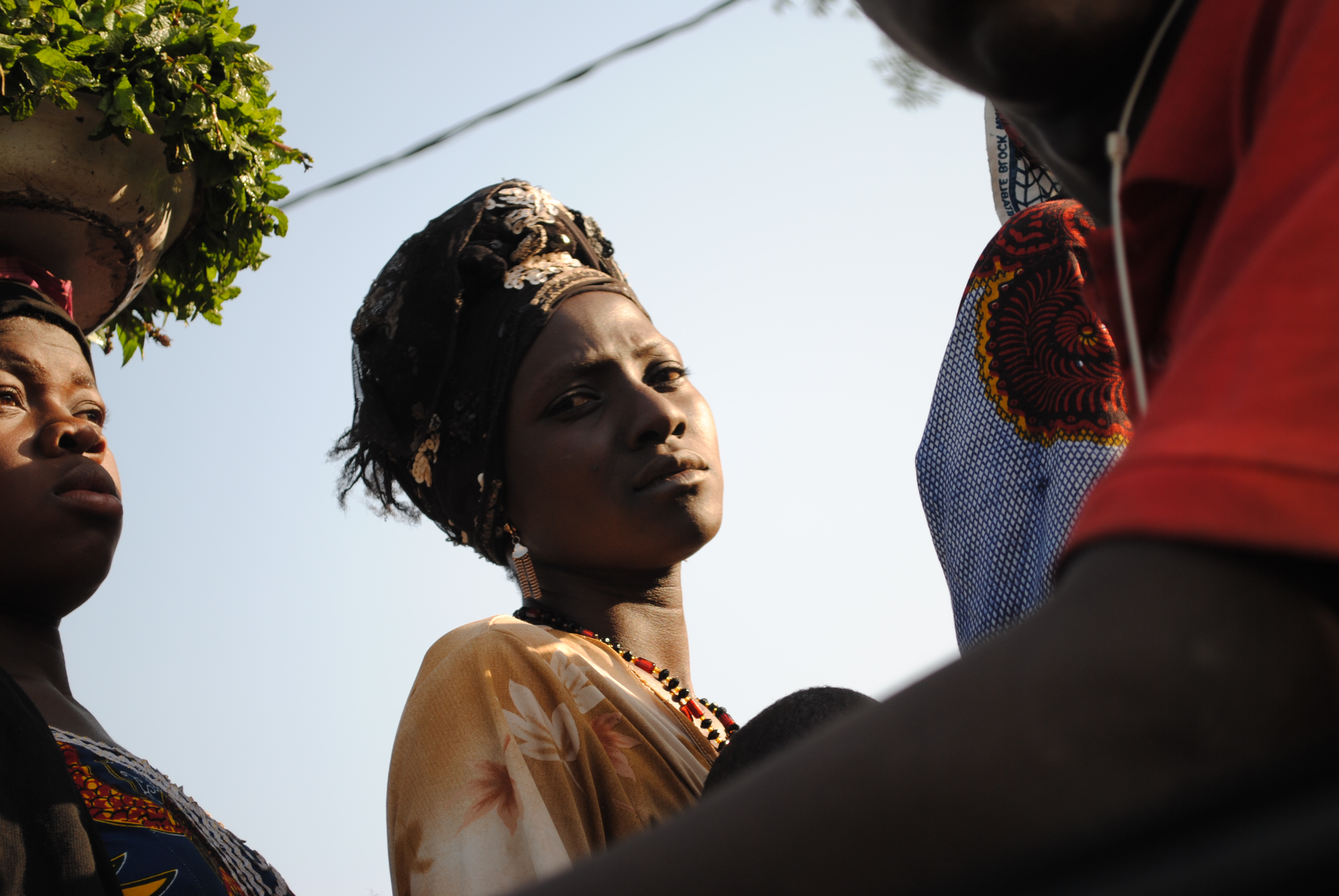
Breaking the Cycle of Hunger in the Mountains of Northern Pakistan

Tackling intergenerational stunting and undernutrition requires targeted interventions

Hafiz Ur Rehman (right) next to his mother, is a beneficiary of the Central Asia Stunting Initiative (CASI) project run by Aga Khan Health Service Pakistan in Gilgit-Baltistan. He was born with severe acute malnutrition. Nasira, his mother, is busy preparing food for her family, lighting up the fire, at their home in Immit Valley, Ghizer District.

Nasira Wali is snapping pieces of Juniper wood in the dim light of her living room. She places the kindling on the open fire. Soon the flames lick. Her veiled face glows. She heats up some milk.

It is a heart-warming moment, but Nasira’s situation is pretty bleak. Her family is trapped in a cycle of hunger. In her village and throughout the far north of Pakistan, it requires an extraordinary effort to break it.

Nasira’s four-year-old son, Hafiz, sits beside his mother. He stares at the ground for several minutes. When he was about nine months old, Nasira says, he began crying every night, his skin turned “white” and his hands and feet began to swell.

“When he couldn’t sleep,” she says, “I couldn’t sleep. Seeing my baby like that…I was so anxious.”

Nasira and her family live in a village called Immit, which lies at the southern slopes of the great Pamir mountain range.

Outside Nasira’s house, there are a few green, terraced fields of wheat, potatoes and onions, lined with apricot and apple trees.

Shimmering willows and poplars offer shade. It could appear idyllic, but the reality is far from it: 136,000 children under five in Gilgit-Baltistan – 46 per cent of that age group – are stunted.

“We are a poor family,” says Jamjur Naroz, another mother I meet in Immit. Her house is half-constructed, with grey tarpaulin sheeting protecting the front door.

Jamur’s husband works as a labourer, earning £3 a day. This is the family’s total daily income.

“We cannot afford a balanced diet,” she says.

Their son Kaleem was too weak to breastfeed properly as a newborn. Today, aged two and a half, he is both stunted and underweight.

Serious undernutrition has life-changing consequences. When both mother and child don’t consume nearly enough macronutrients (proteins, carbohydrates and fats) or micronutrients (vitamins and minerals) during the pregnancy and breastfeeding period, children like Hafiz and Kaleem are physically impaired for life.

Severe undernourishment hinders their physical development, which includes, of course, their brains. They are more likely to face poverty later in life. Their children could then easily suffer the same fate. This is why nutrition experts talk about an intergenerational cycle of hunger.

The International Fund for Agricultural Development (IFAD) is trying to break this cycle by tackling poverty through bolstering farming in northern Pakistan.

IFAD’s Economic Transformation Initiative (ETI) is enlarging farmer smallholding sizes. It has established over 160 cooperatives for more than 40,000 farmers.

Cooperatives are crucial to farmers’ development. Sharing grain stores lowers costs, while greater collective output enables farmers to negotiate better prices.

Cooperatives help farmers access better information, finance and markets. These benefits can increase returns and production.

The ETI has also embarked on a massive infrastructure project. Across the mountains of Gilgit-Baltistan, IFAD has built over 430 km of irrigation channels and 380 km of farm to market roads. “It is a huge and herculean task,” says IFAD’s Khadim Saleem, who coordinates the ETI project.

Pakistan’s government is leading efforts to break the hunger cycle in the region and nationally.

Mohammad Abbas, project director at the department of health in Gilgit-Baltistan, refers to the government’s national cash transfer scheme, known as the Benazir Income Support Programme (BISP), among others.

Launched in 2008, the monthly cash vouchers of between $15 and $20 are sustaining some of Pakistan’s poorest.

The scheme is working: between 2011 and 2019, the percentage of BISP beneficiaries below the poverty line fell from 90 to 72 per cent, according to a World Bank evaluation published this year.

Yet while the BISP has succeeded in tackling poverty in this northern region, the programme is quite a blunt instrument; more targeted interventions are also required.

In a treatment room of the health clinic in Immit, Gulsherran Mohdsadik is slipping a measuring tape around Urwa Hussain’s left arm.

Gulsherran positions the four-year-old girl on some scales. She then measures her height and the data is recorded in a book.

Gulsherran is supporting Urwa as part of the Aga Khan Development Network’s (AKDN) Central Asia Stunting Initiative (Casi).

Three years ago, Urwa was stunted. Luckily, however, she was on the Casi books.

During a routine visit to the Aga Khan Health Centre in Immit, Ghizer District, Senior Lady Health Visitor Lal Begum and Lady Health Visitor (LHV) Gul Shereen measure the height of Syeda Urwa
Syeda Urwa is weighed and measured during a routine health check up Credit: Arsalan Haider/AKDN

The Casi team educated her parents on breastfeeding techniques, complementary feeding, dietary diversity and hygiene. They provided a nutritional supplement called Ronaq for a full year and monitored her growth each month.

Over the past three years, her height and weight reached the average centile for her age. Today, she is thriving.

Since 2019, Casi has been tackling undernutrition in nearly 450 of the most remote mountainous regions of Pakistan, Afghanistan and Tajikistan.

Teams of nutritionists are sweeping through the valleys, speaking to villagers, assessing their health status, raising awareness of better feeding practices and, where necessary, donating high-nutrition supplementary feeding products.

The overall results are positive: where Casi operates in Gilgit-Baltistan, in just five years since the project began, the prevalence of stunting among children under five has dropped from 41 to 35 per cent or just over one in three, according to an Aga Khan University evaluation. The fall in stunting is happening faster than the global average, based on Unicef data.

But despite these programmes, so many families continue to fall through the cracks.

Nasira’s son, Hafiz, for example, suffers from anaemia so severe that he can’t concentrate, so he can’t go to school. He has gastric issues, so he can’t easily eat.

Nasira has to give her son medication like Trimetabol, to treat his lack of appetite and digestion problems. He wears a leather amulet containing verses from the Quran and his parents pray for him.

As I write this, after my time in Pakistan, I wonder what Hafiz’s future could have been.

If only he and his mother had been able to eat properly in those early years, when she was pregnant and for a year or two after his birth. Perhaps, I reflect, he could have gone on to study engineering, medicine, law. He could have supported his family and his community.

He could have pursued his dreams.

Our dream should be a world where no family has to survive on £3 a day; where all of us can thrive. It starts with the food we eat.

This article was supported by the Aga Khan Development Network and published by The Telegraph on 16 October, World Food Day.

From Hunger to Hope

Kenya’s transition to sustainable food production

Farmer PETER IRUNGU JOROGE, 52, adds his home-made compost into the soil on his crop-growing plot in Muranga County, central rural Kenya, June 28, 2023. © AKDN/Georgina Goodwin

Justus Ndemwa is sitting on an empty plastic water canister. He looks away. His voice is soft and faltering. “For five years the rains have failed,” he says. Some days, the 72-year-old, who suffers from anaemia, eats only rice or beans. He is not alone. Now because of the high cost of food and the impacts of climate change, millions of Kenyans face hunger every day. As the situation persists, something, surely, has to change.

Ndemwa and his three children live in a brick and mud hut no larger than a double bed in a field a few miles from Kauwi town in Kitui County. The landscape is sparse: the odd failed corn field, thorny scrub and patches of dry grass. The family lives largely off handouts from people in Kauwi. Ndemwa is waiting for cash transfers from the World Food Programme. Otherwise, he prays. “I pray so much,” he says, “more than five times a day.”

Increasing numbers of people in Kenya are experiencing hunger, partly because of food shortages and prices being far above their five-year average. In addition to the lack of supply, food price rises are also due to the lingering effects of the COVID-19 pandemic, which caused labour shortages and constrained supply chains. On top of this, the war between Russia and Ukraine thwarted fertiliser supplies. It also prompted countries to impose food export controls. Energy price volatility has also created problems for farmers globally.

In this choppy geopolitical context, some agribusinesses in Kenya are buffering farmers’ risks while maintaining food production. One of the largest exporters of green beans to Europe, Frigoken, for example, has for decades created contracts with each of the tens of thousands of smallholders growing the crops. Well before the harvest, the company agrees on a pre-set price with each farmer for their beans, thereby assuring them a reliable market. Frigoken helps the farmers access inputs like fertiliser on a credit basis. It also exposes the growers to technical knowledge through training programmes delivered by extension workers. As such, both the farmers and the company boost their yields and income.

In his lush plot in Muranga County, surrounded by banana and eucalyptus trees, Peter Joroge shares his success growing beans with Frigoken for the past decade: “In the beginning,” he says, “I would get 80 to 100 kg per unit annually. But it has gradually increased to 200 kg per unit. I wish my parents had farmed the way I do,” he adds, “because I would have gone to school for longer.”

As well as supporting them with growing cash crops, Frigoken also helps farmers produce staples such as maize for their own consumption. This strengthens smallholders’ household food security alongside their longer-term viability as food producers.

At the Frigoken processing factory in Nairobi, meanwhile, 85 percent of the workforce is women. Staff receive decent pay, health care and pension plans. There’s even a crèche. Contrary to perceptions of corporate agribusinesses exploiting workers to maximise profits, Frigoken supports them and incurs their risk while delivering a commercial return.

Yet beyond the fallout of the pandemic and the Ukraine war, there’s another factor causing hunger in Kenya: climate change. According to data shared by the Kenyan meteorological department, average annual temperatures in Kitui County have risen by 1.9°C over the past 40 years. That’s more than double the global average. Combine this heat with a prolonged lack of rainfall and no wonder crops are struggling to grow.

According to the Integrated Food Security Phase Classification (IPC) analysis covering the period between March and June 2023, there were 5.4 million “acutely food insecure” people in Kenya.  These people would often go a day or more without eating anything at all. The main cause was drought; in the worst areas, the rains had failed for at least four successive years. This is why the number of people facing such severe hunger had risen steadily since 2020.

In this desperate situation, farmers, technocrats and politicians must respond to environmental as well as financial challenges. Fortunately, some initiatives offer hope.

Rosemary Waweru is hoisting a four-metre-high stick into the foliage of a colossal avocado tree. Soon they begin to fall. Thump. Thump. In less than a minute, eight oval fruits have thudded to the ground. She gathers them into a pile, smiling. As large as ostrich eggs, their skins gleam emerald green.

The buxom 62-year-old manages her own three-acre farm in Kiamuchwe, a village in Kirinyaga County. The countryside is dense with plots of maize, peas, barley and wheat as well as cash crops like avocados, mangoes and bananas.

Waweru is now crafting her own natural plant-based pesticide as well as a fertiliser made by fermenting chicken feathers in water. She has adopted these practices through the Maendeleo project, a pilot launched in 2022 as a collaboration between the Aga Khan Foundation (AKF) and Frigoken. In switching from chemical to organic, Waweru’s methods are improving her soil, plant and native species health.

“Regenerative agriculture is about giving back to the soil,” says Leigh Winowiecki, a soil scientist at CIFOR-ICRAF in Nairobi. “For far too long, we have been taking soil for granted. We need to think of soil as our bank account, we cannot continue to draw from it without giving back.”

In Kenya, the Maendeleo project is giving back. At a national scale, the practices adopted by farmers like Waweru could regenerate entire ecosystems and regulate the water cycle. They can also mitigate greenhouse gas emissions: by dropping chemical inputs, the Kenyan is also helping to reduce the emissions that occur from the manufacture and transport of these synthetic products.

Waweru’s new farming practices are not just greener; they’re also more productive. Her trees have gone from producing an average of 250 avocados each year to over 350 today. Better still, now that she produces them naturally, she sells them for up to double the amount she could before.

In less than two years, Maendeleo has had extraordinary results: average maize yields amongst the initial 2,500 farmers targeted in Kirinyaga and Embu counties have grown by 30 percent, while coffee production has jumped by 60 percent. Farming ecosystems are flourishing.

The farmers under the pilot have virtually no input costs anymore. This is the main reason why they’re saving around 20 percent on bills for each crop cycle. Another saving comes from fewer medical bills. Before going organic, many farmers were visiting clinics regularly to treat illnesses caused by exposure to synthetic pesticides.            

Regenerative agriculture is healing bodies as well as the land. It is cheaper for farmers and potentially more productive. Maendeleo is now attracting “huge” interest from research institutions, donors and the private sector, says Didier Van Bignoot, the AKF global advisor in sustainable agriculture, food security and climate resilience. Over the coming years, it plans to reach three million smallholder farmers in Kenya, Tanzania and Uganda.

Yet the road to end hunger is long. Millions of Kenyans are suffering every day. Tackling such widespread deprivation requires decades-long investments into the building blocks of society: education, health, infrastructure and social protection. But agriculture, too, matters. As Peter Joroge implied, good farming has always been central to development.

As I write this, some months after visiting Kenya, I remember my impressions from that final day visiting Kitui County. Herders leading bony cattle along dirt tracks. Threadbare fields of maize. Clouds overhead, but no rain. Most of all, that conversation with Justus Ndemwa. It was so muted. Words seemed pointless.

Though some extraordinary initiatives are changing things on the ground. Regenerating ecosystems and sustaining livelihoods, they are helping food systems to flourish. Donors, government and business need to get behind them. Not with more words, though; with action.   

Published in the Telegraph and Aga Khan Development Network on World Food Day, 16 October 2023.

A crisis of “Western” reason?

harryeyres's avatarharryeyres

The usual hand-wringing – including the hand-wringing of this blog – about the Brexit vote and the election of Donald Trump on a ticket with disturbing echoes of the 1920s and 1930s only goes so far. I’ve been thinking in recent days and weeks that we need, or at least I need, to go further into this, to see it as not just a political crisis, a crisis of democracy, but as a philosophical crisis, a crisis of reason.

Let me sketch out roughly what I mean. Both the EU as currently constituted and interpreted and the Democrat programme in the US as exemplified by Hillary Clinton are essentially technocratic, managerial projects with little ethical or transformative substance. True, and this is important to me even if not to some critics of this blog, both enshrine certain principles with regard to lack of discrimination, minority rights, environmental protection, adherence to…

View original post 600 more words

The Curdled and Uncurdled Latte

harryeyres's avatarharryeyres

The sky which was clear blue an hour ago is now milky. The last couple of days here in London we’ve had bright sun with even a hint of warmth in it, after the long although not very wintry winter, and that lovely fresh smell I associate with early spring, my birthtime. I’m in a cafe with my latte (I refuse to call it a flat white), pondering. I’m pondering especially the remark by my reader Joan-Eric Torrent questioning whether it’s right to enjoy these pleasures of ease and relative affluence while so many are suffering. “That thought curdles my latte,” he wrote. My reply to him was that we have to begin though not end with ourselves and we will not be able to radiate or communicate much well-being or joy if we are too immersed in our own suffering. That was what I learned, with greater or lesser success, from…

View original post 194 more words

Mali’s Prospects for Peace

Bamako woman.jpg

The attack on the Radisson Blu hotel in Bamako on 20 November was symptomatic of Mali’s protracted social conflict. Twenty-one people were killed during the day-long siege, including the two jihadists from Al-Mourabitoun, one of several radical Muslim factions operating in the north of the country. A recurring conflict between northern Tuareg actors and the government has also plagued Mali since it gained independence in 1960. In 2012, the ‘fifth Tuareg uprising’ and almost simultaneous jihadist attacks broke out across the north, expelling government forces from Timbuktu, Kidal and Gao regions. These parallel movements threatened Mali’s state sovereignty, prompting French military and UN peacekeeping interventions as well as an internationally mediated peace process. Three years later, it remains to be seen whether lasting peace can be achieved in Mali.

In the short term, successive French military interventions Serval and Barkhane have weakened northern radical Islamic militant groups such as Ansar Dine, which led the 2012 jihad, and al-Qaeda in the Islamic Maghreb (AQIM). The French army recently reported that between July 2014 and 2015 Operation Barkhane had removed 125 terrorists from Mali and seized 20 tonnes of munitions. The UN peacekeeping force (MINUSMA) has also helped to stabilise the conflict, despite recently becoming the fourth-deadliest mission in the history of the blue helmets. In addition, Mali’s neighbouring states coordinate to tackle security challenges as part of the Nouakchott Process, which started in late 2014. These initiatives have de-escalated the conflict for now.

The peace process has also made some advances in conflict transformation between 2014 and 2015. The large number of northern armed actors were united in their hostility towards a Malian state they saw as exclusionary and corrupt, but splintered over goals and methods. By July 2014, the mediation team, led by Algeria, had successfully coalesced the actors into two coalitions – the more statist, government-leaning Platform, and the more secessionist Coordination des mouvements de l’Azawad(known as ‘Coordination’) – which became compliant within a political process. By the time the Coordination signed the ‘Algiers Accord’ on 20 June 2015, the process had achieved notable compromises among parties. For example, the Coordination dropped its goal of a separate ‘Azawad’ territory and agreed to back a single, secular Malian state. The government also shifted its position, agreeing to the official use of the name ‘Azawad’ for the northeastern region, and several additional political concessions.

Significantly, the Accord offers considerable devolution to northern Tuareg populations represented by the Coordination. It also promises economic investment in the north, which both the Platform and the Coordination desire. Meanwhile, both northern factions have agreed to disarmament, demobilisation, reintegration and reinsertion (DDRR), including merging some elements into the national security forces. Socially, the Truth, Justice and Reconciliation Committee, which aims to investigate violence and abuses committed in the country during 1960–2013, is an important step towards fostering a culture of reconciliation.

The peace deal also generated a positive international response, with France pledging €360 million in reconstruction assistance on 21 October. The following day the Organisation for Economic Co-operation and Development (OECD) hosted an international conference on Mali, to solicit further investment from the public and private sectors. The meeting concluded by stating that Mali requires some €3.5 billion in humanitarian and development assistance during the next six years.

All of these initiatives are de-escalating conflict in Mali. But the question remains whether they are actually transforming the conflict. Three developments in 2015 would suggest not. Firstly, the Coordination refused to sign the Algiers Accord when the Platform did so in March, because, among other unmet aspirations, the group rejected the proposed security arrangements. This rejection was almost certainly based on concerns that its forces would not be stationed optimally when ‘guarding’ northern roads. Secondly, both the Platform and the Coordination broke the ceasefire agreement, central to the Accord, several times between May and September, halting the implementation of the peace deal. Each breach was a result of armed elements moving into ‘forbidden’ territories in the northern regions. Their objective, again, was to claim key strategic roads when, through the Accord, they would soon be entrusted to ‘police’ them. This manoeuvring led to several clashes, the last of which, on 17 September, resulted in 15 fatalities. Following this ‘mutually hurting stalemate’, the third key event was a three-week long meeting in Anefis between the Platform and the Coordination, which ended in mid-October with a deal to end hostilities. According to reports, this so-called ‘pact of honour’ again centred around cantonments along the northern roads.

Both parties’ concerns over the control of roads in the north is explained by the prevalence of smuggling in the area. Illicit trade across Mali’s northern border has grown since the 1970s – from cigarettes, to cannabis, to cocaine, heroin, arms and human beings – and has become a vital source of revenue for northern communities. Controlling roads heading into Algeria guarantees vital income through bribery and kickbacks. A worrying associated trend has been kidnapping, particularly by terrorist networks seeking cash for the release of hostages.

The fact that so much of the peace process has, in effect, hinged on control over trafficking routes reveals two key insights: firstly, that criminality and corruption is endemic both in the north, but also reputedly in Bamako, massively undermining Mali’s long-term governance and security. Secondly, that people engaged in such activities seek this income for themselves and their communities, revealing the persistent poverty and deprivation of the north, which is still resource-poor and economically marginalised. As Paul Collier has forcefully argued, this kind of poverty is a key driver of conflict. Both insights suggest that the structurally rooted nature of conflict in Mali persists, despite efforts at delivering peace.

For real conflict transformation in Mali to occur, northern criminality needs to be tackled by force, but also through strengthened governance and rule of law. Broader recognition of the problem is necessary: Mali’s diplomatic community still treats cross-border trafficking as a taboo; radical ‘Islamists’ or tribal dynamics are instead seen as the key drivers of conflict. The Nouakchott Declaration refers to transnational trafficking networks merely in passing. Donors should force Bamako to tackle the issue by disinvesting, for example, when trafficking indicators are triggered. The UN Office for Drugs and Crime (UNODC) remains weak in Mali. International organisations must be capable of confronting corruption at the central level.

But in parallel with such efforts, the international community must support the government in promoting legitimate forms of income to replace this criminal economy. France’s financial pledge is undoubtedly important, but it remains a ‘pledge’, only €80 million of which was dedicated to the north. The government must honour its commitments, enshrined in the Algiers Accord, to northern political and economic integration. Moreover, the international community must incentivise this assimilation into the national economy by promoting existing assets, like tourism, and identifying alternate revenue streams. In this way, the northern groups can be legitimately empowered, in conflict analysis terms, so as to be able to negotiate effectively with the government within an ongoing political process.

As long as trafficking and criminality are allowed to continue, and no viable alternative exists, then this war economy will prevail throughout northern Mali. In this context, armed actors will continue to rise against the state. And jihadi ‘spoilers’ will continue to kidnap and kill, as they did in Bamako on 20 November. As such, Mali’s prospects for peace remain worryingly remote.

International Institute for Strategic Studies


Womad

As someone who lives in Rome, where the sun shines most days and people usually wear clothes that look fine, and they eat good food with wines that complement each other, I had moments at Womad music festival where I thought to myself ‘If your average Italian was to find themselves here, they really would think the English are an eccentric bunch!’

On a blustery Saturday afternoon, in the “World of Well-Being” area, I saw a sixty-something year-old grey-haired woman wearing a hemp, rainbow-coloured elves hat. She was walking past a Tibetan yurt, which was installed next to another tent which contained devices that seemed to stretch people, by hanging them from their feet. This was supposed to be relaxing.

On a freezing Sunday morning, after three hours of continuous rain, I saw a woman in her thirties, trudging barefoot, ankle-deep, in a huge pool of muddy water. This pond had emerged next to a large L-shaped line of green portaloos. She was navigating through, holding her Birkenstocks in one hand. Her face was disgusted, contorted against the diagonal drizzle. She looked utterly miserable. What on earth are they thinking, the Italian might ask?

My answer would be the music. WOMAD has always had among the most talented musicians, producers and singers on earth coming its way.  This year was no exception. Hip-hop legends De La Soul had crowds nodding to their funky beats. South Sudanese duo Acholi Machon made gentle political statements at the wooded Ecotricity stage. Tiken Jah Fakoly performed with his usual gusto and guts – singing about the injustice of a world where Africans cannot enter European countries but Europeans can travel and live anywhere they want in Africa. The Music of William Onyeabor, the headline act, had everyone dancing and smiling to their electronic soul and disco vibes.

Rain or shine, WOMAD is consistently the most diverse music festival in Britain. Everything else – the mung bean soups and shiatsu healing centres –  is secondary.

Womad music festival takes place every July in Charlton Park, Malmesbury.

Stuffed and Starved

I have just finished reading Raj Patel’s ‘Stuffed & Starved’ (1st edition, 2008). In this brilliant polemic, he addresses most of the key factors underpinning the world food system.

Patel argues convincingly that the large food corporations are socially pernicious. His range is of research is really impressive. I also liked the tone he uses; he never speaks from a position of authority. He uses vignettes to paint the bigger picture. He lets others talk. And some of his ideas and insights are so illuminating.

Though Patel  seems to steer clear of any major political or structural analysis. Government policies and the role of global governance institutions, outside of the WTO, are barely addressed.  I got the impression that Patel implies that it is these corporations who are responsible for the ‘starved’; that they are leaving populations destitute. I would have liked a clearer argument on food security here. I think the responsibility for food security lies more with the governments within these countries than foreign corporations. But the role of government lies largely outside of Patel’s narrative.

In any case, this is, as Naomi Klein described it, a “dazzling” book and well worth a read.