Bullfighting


bullfight

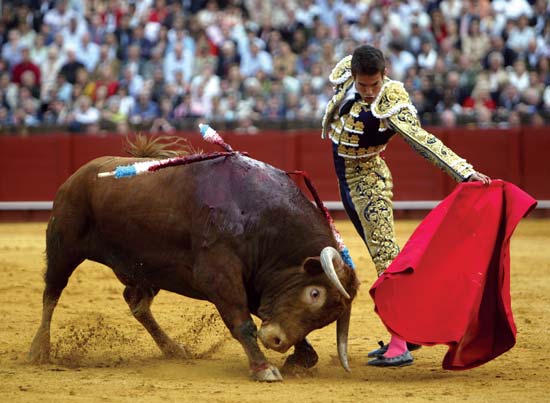
Ten days ago I watched a ‘bullfight’ in Jerez. We were there during the Feria. At the time, it was hard to process the experience of watching a bull slowly killed by a small group of men on a sandy floor.

The crowd are elegant. They wear suits and ties and elegant floral dresses. Those who sit in the sun have fans. People drink sherry out of small glasses. They applaud when the bull comes lumbering out.

It charges out of the gate. The first thing one notices is how much muscle it possesses. The whole body is rippling; the haunches creased with muscle that wobbles over his back. You notice its size. Most of the them are more compact, lower to the ground, than you’d expect. But they move fast. And stupidly. They have no expression. Dumb, is the word. They look around confused. They reach the edge of the circular ground. A man with a pink cape gets the bull’s attention. It moves towards him with trite gusto.

The ease  with which the man moves away from the bull makes one pity the bull immediately. We’re smiling at our superiority from the start. The picadors emerge. They weaken the bull. The armoured man on the protected horse emerges. He plunges a spear into the bull for ten seconds. He twists the spear in deep. The bull now is severely weakened. No longer does he run with gusto. He’s breathing deeply. His stomach contracts and expands greatly with each deep breath.

The picadors spring balletically towards it and plant decorated pins onto the arch of the bull’s neck. Blood seeps down his neck. The toredor spins the bull around him, to the joy of the crowd. The bull’s stomach is now wrenching fast.

Eventually he plunges a sword deep into a spot on the bull’s neck. I assume it carries through to the bull’s heart. If he misses the spot, the bulls stays alive. When this happens the crowd whistle. They do not approve of this. It is unfair to the bull! It is bad sportsmanship.

To me this ‘show’ of mercy to the bull seems absurd. The animal never had a chance in the first place. There’s no logic to their thinking. Sure, by hitting the spot you assure a less painful, drawn-out death. But you’re wounding the bull throughout its time in the stadium with the initial spearing and the pins.

The toredor eventually kills the bull. The crowd cheers. The bull lies on its side, tongue dangling. Sometimes its feet twitch as it dies. Horses come in with chains to drag the bull away. The trailing body leaves a smooth wide line over the sand as it is dragged towards the pen. Its feet remain taught. The banality of death.

I almost cried at times during the six fights we watched. The killing of animals was of course shocking in itself. But it would be hypocritical to oppose it while I eat meat, slaughtered in factories.

What is disturbing is we are paying to be entertained by the killing of animals. I looked across to examine the faces of the crowd and felt very alone and somewhat afraid. Like how I could feel sometimes on a dance floor when lots of people are on drugs.

And in a sense, what I was watching was the same. A kind of mass hypnosis. A sense that since others are there, participating, it’s ok. And my fears about human weakness came to the fore. Our hypocrisy. Our stupidity. The apparent ease with which we can legitimise something in numbers. Weakness in numbers.


Globalization And Its Discontents

I have just read Joseph Stiglitz’s Globalization and Its Discontents (2002).

Stiglitz was the Chief Economist at the World Bank and Chairman of President Clinton’s Council for Economic Advisors. He won the Nobel prize for Economics in 2001.

He has formidable expertise and experience and has succeeded in writing a book about economics that is both readable and compelling.

His basic argument runs that the International Monetary Fund (IMF), the international economic institution responsible for supporting countries facing economic crisis, was largely responsible for the failure of globalization in the 1990s.

The IMF, states Stiglitz, continuously adopted an out-dated and dogmatic adherence to market fundamentalism – the belief in letting the free market deliver economic stability and growth. Their policy to achieve this, in East Asia and Russia, was incoherent and went against the basic tenets of Keynesian economics.

The IMF’s failed policy prescriptions included fiscal austerity, high interest rates, rapid trade liberalization, liberalizing capital markets and privatization.The IMF’s institutional “fear of default” also comes in for criticism.

I enjoyed this book though I found the focus a little too narrow; it rarely deviates from its specific critique of the IMF. Surely other players should come into consideration if you intend to address the failings of a phenomenon as broad as globalization? Only the World Trade Organization, the U.S. Government and the World Bank, are addressed in this context.

The “behind the scenes” actions of corporations and foreign governments in influencing policy are ignored. Here Stiglitz misses an important trick. I would also have liked to see more analysis of how poor economic decisions directly affected people in these developing countries; the repercussions of, for example, liberalization policies were often enumerated only very vaguely.

Stiglitz undoubtedly succeeds in revealing the impudence and irresponsibility of the IMF’s interventions in developing countries. But I wonder how else it could operate? The “international bureaucrats” to which he so often refers must work according to very tight timelines. Sometimes these seemingly mundane factors help to explain their lack of flexibility or foresight.

But it’s nevertheless shocking to learn how much the IMF is governed by the narrow interests of the Western financial community, whose investments are recouped via the multi-billion dollar cash injections into these developing economies, while their poor lose their jobs and livelihoods and the middle classes foot the tax bill that ensues.

Stuffed and Starved

I have just finished reading Raj Patel’s ‘Stuffed & Starved’ (1st edition, 2008). In this brilliant polemic, he addresses most of the key factors underpinning the world food system.

Patel argues convincingly that the large food corporations are socially pernicious. His range is of research is really impressive. I also liked the tone he uses; he never speaks from a position of authority. He uses vignettes to paint the bigger picture. He lets others talk. And some of his ideas and insights are so illuminating.

Though Patel  seems to steer clear of any major political or structural analysis. Government policies and the role of global governance institutions, outside of the WTO, are barely addressed.  I got the impression that Patel implies that it is these corporations who are responsible for the ‘starved’; that they are leaving populations destitute. I would have liked a clearer argument on food security here. I think the responsibility for food security lies more with the governments within these countries than foreign corporations. But the role of government lies largely outside of Patel’s narrative.

In any case, this is, as Naomi Klein described it, a “dazzling” book and well worth a read.

Feeding Frenzy

“Can we feed a world of 9 billion by 2050? Is the current market turmoil an early sign that the global food system will not cope?” These are the questions that Paul McMahon seeks to answer in his highly readable book, Feeding Frenzy. Written in short, clear sentences and rarely lapsing into jargon, McMahon succeeds brilliantly in describing the food supply challenges we currently face.

Feeding Frenzy’s opening chapter gives us a succinct history of food from 10,000 years ago to the present day. The rest of the book covers the key threats to ‘food security’, such as population growth, finite food resources, the growing use of biofuels, climate change, unstable markets and self-serving traders, all of which saw food prices spike in 2008, causing a global food crisis, with riots flaring across the developing world.


Feeding Frenzy also looks at the macroeconomic obstacles; the fact that today many developing countries import most of their food, rendering them vulnerable to price rises. Two later chapters outline multinational commodity corporations’ scramble to secure ‘supply chains’, as well as food-importing governments’ efforts (through sponsored companies) to acquire land, in so-called ‘land grabs’. These moves see commercial actors seize control of supplies, with the dangerous potential to engineer price rises, while the ‘grabs’ undertaken by state bodies may insulate their domestic consumers from wider market volatility, but they also restrict global supplies, thus threatening food security in other countries.

McMahon gives a clear overview of these scenarios and sets out the essential steps which, he argues, must be taken: free trade in global commodity markets; enabling small farmers in poor countries to grow more food; agro-ecological approaches to farming (such as Henri de Laulanie’s rice-farming intensification system, applied in Madagascar and now adopted in forty countries worldwide); and the restructuring of markets to support food security over commercial gains.

Feeding Frenzy is really a rebuttal of those alarmists who believe we are failing to meet growing demand with adequate supply. McMahon argues convincingly that we have the natural resources to produce enough food to feed our richer, more populous and climatically varied world by 2050; we just need to rationalize our food supply systems.


Times Literary Supplement


Ethiopia: The Last Two Frontiers

John Markakis’s latest book, ‘Ethiopia: The last two frontiers’, presents a political history of Ethiopia covering the period 1916 to 2010. Focusing on the transformation of a multicultural empire into a modern nation state, Markakis continuously leans on the “centre/periphery” dynamic as a method of analysis. In the vein of subaltern studies, he seeks to give agency to “peripheral” peoples in the state-building process.  Using a vast range of historical, political and anthropological sources, Markakis describes Ethiopia’s northern and central regions as comprising the “centre”. The “last two frontiers” are the two peripheries: the “highland periphery”, essentially the Oromo-dominated southern highlands, and the “lowland periphery”, inhabited by the Oromo but also by major pastoralist groups such as the Afar and the Somali, as well many other smaller ethnic groups.

Split into five parts, the book begins with a discussion of the main peripheral peoples, followed by a history of the modern Ethiopian empire from the nineteenth to the twentieth century, under Emperors Menelik II (1844–1913) and Haile Selassie (1916–74). During this period, Amharic became the lingua franca, excluding non-speakers from power. Both highland and lowland peripheries were subjugated: exploited for labour, taxes and tribute. Markakis then assesses the period of Dergue rule after the deposition of Haile Selassie, in 1974, in which the Marxist dictator Mengistu Haile Mariam succeeded in expanding the state apparatus until his overthrow in 1991. The fourth part describes how the Tigray People’s Liberation Front (TPLF), led by Meles Zenawi, sought a state and national identity that would encapsulate Ethiopia’s diversity, empowering the three-quarters of the population that were not Amhara. Subsequently re-formed into the Ethiopian People’s Revolutionary Democratic Front (EPRDF), their brand of government has blended leftist nationalist ideology with a pragmatic drive to commercialize agriculture in the south. The final part of the book assesses the impacts of federalism on the diverse ethnic groups populating the southern regions.

Markakis believes the EPRDF has overseen an expansion of the state, with more schools and hospitals established in previously neglected regions. Pluralism has been feted. But beyond basic services and symbolic gestures, he argues, the “regime” has kept a “tight reign” and is “lacking in imagination” when it comes to offering real political power to peripheral regions.

‘Ethiopia: The last two frontiers’ reflects Markakis’s immense knowledge and passion for Ethiopia. Although the tone, structure and style could be lighter, readers will nevertheless find much worth in this expansive and original study.


Times Literary Supplement

Venice Biennale: The Pavilion of the Holy See

“The Encyclopaedic Palace” was the title of this year’s Venice Biennale. It was taken from Italian-American artist Marino Auriti’s 1950s model for a 136-floor Encyclopaedic Palace, intended to house all humanity’s achievements. Curator Massimiliano Gioni described it as the fulfilment of his aim for an exhibition to be about “the desire to see and know everything”.

I had assumed this label to be expedient; a name which would allow the show to accommodate the vast array of art shipped-in from the four corners of the world. And, in many ways, the biennale was no different from previous years. There was an absolute abundance of art. As a collection, its diversity and seeming incoherence was matched only by its size. It continued to surprise until my senses could no longer respond. To the cynic, or the plain lazy, it could feel as if the exhibition is merely a reflection of our era; excessive, disparate, grabbing, elitist.

But the assembled work at the Arsenale was actually very different. Firstly, it appeared close to a unified whole. While their form varied immensely, and the origin of the art too (such incongruence perhaps being a truer representation of modern societies, as bound by the sum of their distinct parts) they shared an altogether more profound commonality: Most of the artists shared a desire to generate knowledge.

Auriti’s model was a towering aspiration, but other art, such as the philosopher-educationalist Rudolf Steiner’s cryptic sketches or Ivorian artist Frédéric Bouabré’s colourful pictograph drawings from his own “World Knowledge” series, are an exuberant and optimistic attempt to build and sustain human knowledge.

This earnest connection between artistic expression and the creation of knowledge was unusual, in an era when contemporary art is so often ironic. The exhibition subverted Enlightenment ideas in which human knowledge must be the product of scientific rationalism. Much of the art was Outsider-ish; childish, playful, narrow and folkish, exemplified by Patrick Van Caeckenburgh’s photorealistic trees.

The other affront to traditional Enlightenment ideas was that knowledge generation must somehow be a secular domain: for the first time ever the Vatican hosted a pavilion.

It was curated by Micol Forti, who curates 19th-century and contemporary art at the Vatican museums. “It’s very important for the Holy See to be here”, she said. “It’s a different situation where you can create a space for a dialogue with different ideas, different ideological thinking, different religions. Here at the biennale, it is not important where you are from: the only important thing is that there is a place where you can speak.”

The idea was the brainchild of Cardinal Gianfranco Ravasi, an enthusiastic polymath who, as president of the Pontifical Council for Culture since 2009, has often tried to build bridges between the Church and contemporary culture.

In this market-place of ideas, the Vatican was actively promoting its role in furthering human consciousness, if not esoteric knowledge of the kind exhibited in the open-plan rooms of the Arsenale. Their three rooms covered three themes. Intense, large-screened interactive videos by the Milanese collective Studio Azzurro focused on creation. These were followed by stark black and white photographic images of man’s destructiveness, by Czech photographer Josef Koudelka. American artist Lawrence Carroll completed the narrative with his hopeful paintings, hinting at restoration and renewal.

The pavilion successfully conveyed these themes, as well as the underlying notion that the Roman Catholic Church remains central to the story of human knowledge. As such the biennale argued convincingly that the sources of human knowledge have always breached the Enlightenment ideal; knowledge has always derived from hermitic outsiders and centralized religions as much as from secular rationalists.

Lawrence Carroll
Lawrence Carroll


The Catholic Herald


Humanitarian Negotiations in Afghanistan

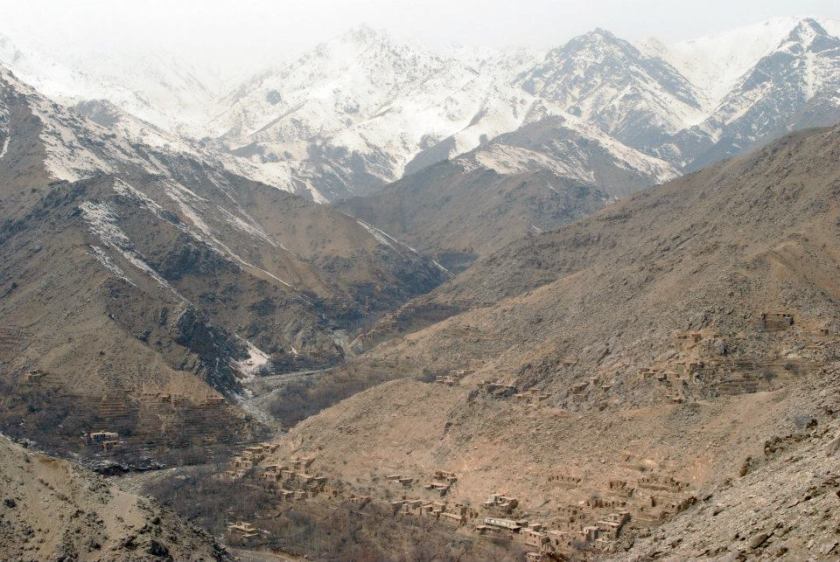
Beyond Istalif

Even for aid agencies with a longstanding presence in Afghanistan, the challenges of securing access are growing. Problems caused by the insecure and fragmented operating environment are compounded by the uncertainties surrounding the transition to Afghan control of security and the drawdown of international combat troops in 2014. Aid agencies are increasingly being forced to rethink their strategies and approaches, and adopt new methods and mechanisms to ensure that they are able to reach those in need of assistance.

Access constrained

The World Food Programme (WFP), the largest operational humanitarian agency in Afghanistan, has worked continuously in the country since 1962. Throughout the Soviet war, the subsequent civil wars and the latest period of conflict following the fall of the Taliban in 2001, WFP has implemented emergency relief and recovery activities, providing food-based assistance to vulnerable communities. The organisation has faced growing operational challenges over the past decade. Since 2006 insecurity has dramatically increased, peaking around 2010–11, and remains a major obstacle, preventing humanitarian agencies including WFP from delivering services in parts of the country controlled by armed nonstate actors. While humanitarian agencies have some form of access to around 80% of the country, access to certain pockets remains a major challenge.

Based on February 2013 data, WFP can fully access (i.e. without escorts) 90 of Afghanistan’s 399 districts. Most of these districts are in the relatively secure provinces of Badakhshan, Balkh, Bamiyan, Kabul, Panjshir, Samangan and Takhar. Otherwise WFP must access districts either using armed escorts, or can only venture to the district centres, not into more remote territory. In more volatile areas, such as the southern, central, south-eastern and eastern provinces (Helmand, Ghor, Kandahar, Ghazni, Khost, Kunar, Logar, Paktya, Paktika, Nangarhar, Nuristan, Uruzgan, Wardak and Zabul), WFP can only access districts using national or international nongovernmental organisations or contracted commercial entities. In eight districts in the northern and northwestern provinces of Badghis, Farah and Faryab and the eastern province of Nuristan, WFP and its partners have no access at all.

Working through partners

In areas that are beyond the boundaries set by the UN Department of Safety and Security (UNDSS) – i.e. areas that UN staffers are strongly advised to avoid for security reasons – WFP uses commercial transporters to deliver assistance, and Programme Assistance Teams (PATs), comprising INGOs/NGOs or commercial companies, such as CTG Global, to ensure effective implementation at the community level. In July 2011 WFP was contracting 80 such teams, rising to 143 by mid-2012. PATs represent six different service providers, ranging from private human resources companies to consultancy firms and NGOs, costing WFP over $2.5 million a year.

Originally intended to enable access to Afghanistan’s ‘no-go’ areas, today PATs also work in low-risk areas, where they supplement the work of Food Aid Monitors. Challenges involved in working with PATs include high staff turnover, capacity limitations, the near-total absence of women in the teams, management problems at the field office level and disputes over differing salary levels. These issues have been addressed through new Field Level Agreements, investment in intensive training, revised roles and responsibilities and changed management and recruitment arrangements. This ensures that PATs can conduct feasibility studies to assess needs, understand the concepts behind WFP’s portfolio of activities and use the WFP monitoring toolkit and follow WFP’s reporting requirements. Commercial transporters are identified by WFP’s logistics arm. They follow their own safety and security precautions and are responsible for their own security. WFP has an agreement with these entities whereby, if any food assistance is lost, the agency is reimbursed by the company.
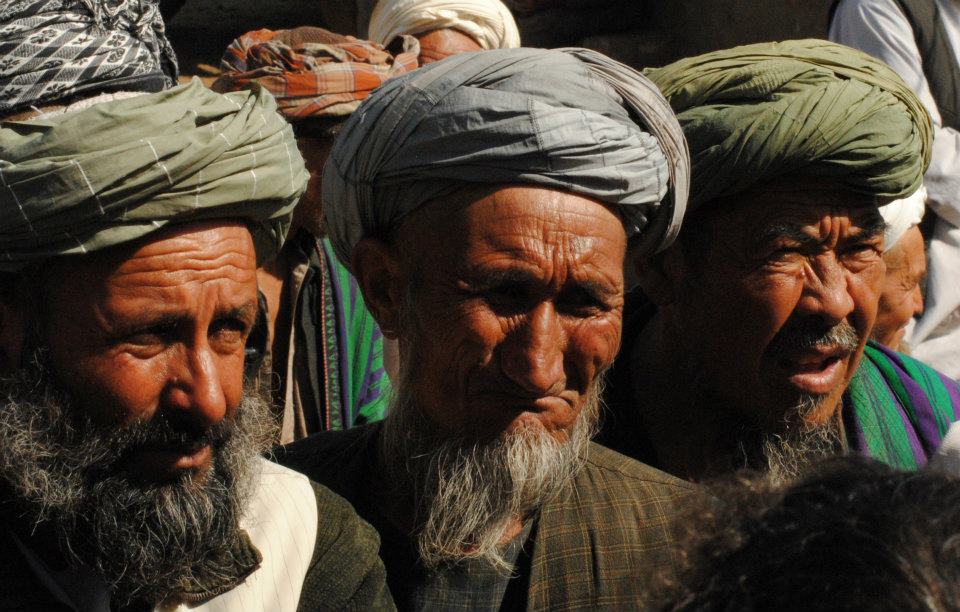
Faces

WFP is also increasingly working with national and international NGOs that are able to access communities under the control of armed non-state actors. These organisations have usually spent many years working in these communities, gaining their trust and building respect among key actors. WFP is also working through communities to negotiate access with armed non-state actors. WFP very rarely, if ever, negotiates directly with nonstate actors; the most effective method is to use community representatives to advocate on behalf of the organisation. WFP’s experience in Kandahar and neighbouring provinces, regions where the government has little control, is that representatives of communities will often come to WFP or other agencies to report their needs, be they focused on health, education or rural development. These representatives take responsibility for their communities’ food security and negotiate with the actors controlling their territory. Community representatives also frequently take responsibility for handling WFP project monitors’ access and security by securing and delivering letters signed by armed non-state actors. However, these assurances only supplement the risk assessments conducted by the commercial transporters and PAT monitors who physically access the territory, and no broad system of assurance is in place.

Relying on community acceptance and mediation can pose risks for those directly involved. In 2009, a community representative responsible for implementing a food assistance project in a district in Kandahar province was seized by an armed non-state actor and accused of distributing American food. After the community explained WFP’s food distribution mechanisms, the man was released and was able to continue the food distribution. In western Afghanistan, WFP succeeded in negotiating some access to Ghor province based on one national staffer’s unique standing and personal relations in the area. Thus, WFP did not need to rely on the community to mediate on its behalf. The national staffer’s networks and reputation meant that WFP was granted access to a region controlled by a criminal actor not directly affiliated with any insurgency, who had preserved some form of authority over several districts in the province for years. WFP successfully monitored food distributions by adopting low-profile approaches. These examples reflect how WFP is dealing with a range of non-state actors with varying motivations, interests and attitudes. As a result, the organisation has to be pragmatic and flexible to seize opportunities when they arise.

In some circumstances, WFP has persuaded local state authorities to speak with armed non-state actors as part of access negotiations. A district-level government representative spoke to Taliban factions in Quetta on behalf of WFP to gain permission to continue a food distribution in schools in a nearby district on the Afghan side of the border. The initial outcome of this meeting was mixed; one faction was in favour of the food distribution continuing, while another was not. WFP worked through an Afghan community representative in Kandahar province, who succeeded in obtaining a phone contact in Quetta. By telephone, he set up an appointment with the Quetta-based representative, outlining the exact purpose of his visit. At the meeting he explained to the Quetta contact that the food was intended for both boys and girls and was coming from a humanitarian agency. Eventually, the distribution (of oil and high-energy biscuits) was allowed to continue.

A new strategy

While WFP has worked through communities and other local authorities to ensure that activities support communities in need, there is no structured approach to negotiating directly with non-state actors. Under its new Country Strategy, WFP is emphasising its commitment to address all humanitarian needs, based on an even more pronounced adherence to humanitarian principles. A more structured approach to outreach is now being implemented, including greater use of local radio (in which WFP’s humanitarian purpose is communicated), engagement with local authorities to explain WFP’s working methods and a greater focus on outreach at other operational and strategic levels. It will take time and flexibility to communicate this operational shift and gain trust and acceptance. The organisation can achieve access for limited periods in specific pockets of the country through ad hoc negotiations, but more comprehensive access will only come with greater acceptance among communities and non-state actors.

The risks associated with distributing food that is branded with the logo of a NATO troop-contributing nation are clearly felt by these communities. Communities in one district in Helmand province have asked WFP to change the logos, or have sought to re-bag food because of the risks associated with receiving a commodity paid for by a government deemed to be an ‘aggressor’ in their eyes, and no doubt in the eyes of local insurgents. WFP tries to persuade donors to remove logos from food for humanitarian purposes. After a series of meetings, one of WFP’s major donors is now considering waiving the requirement to mark assistance in specific areas experiencing conflict.

With the withdrawal of international forces and the PRTs, it may become easier for humanitarian agencies to achieve acceptance. The PRTs were conceived and funded by NATO troop-contributing nations to implement visible, physical construction projects in areas where NATO troops were deployed. They often sought to win the ‘hearts and minds’ of the Afghans, using aid to further a military strategy. This conflation of civilian aid with military objectives, and the disbursement of assistance by entities that were party to the conflict, arguably undermined the perceived neutrality and impartiality of assistance. In parallel, an ‘aid effectiveness’ discourse has seen aid agencies assert their support for the Kabul government, in line with the Paris Declaration, in what has been a conflict context. As a result, aid lost a degree of legitimacy; some humanitarian aid agencies have been targeted by armed non-state actors, and others have lost acceptance in parts of the country that have been fought over.

As the withdrawal of international combat troops continues, the focus of aid is likely to swing back to ‘back to basics’ humanitarian principles grounded in the appropriate allocation of assistance according to needs, impartiality and neutrality. In line with this trend, WFP is keen to widely communicate its humanitarian principles, to achieve optimal impact in line with its humanitarian objectives.

Harry Johnstone was WFP’s Afghanistan Policy Adviser between 2011 and 2013.

Published in the ODI’s Humanitarian Exchange publication, July 2013.
 

Interventions – A Life in War and Peace

Kofi Annan’s memoirs narrate his career as a flying peacemaker, working for the United Nations. Interventions: A Life in War and Peace, takes us from one diplomatic precipice to the next. We traverse devastating failures and lasting successes. In the book’s chaotic world, Annan’s unwavering determination and moral conviction is perhaps the one constant.

Interventions is written by Annan with Nader Mousavizadeh, an ex-colleague, and focuses mostly on his efforts to prevent or resolve global conflict. After an opening chapter on his youth, observing the successful independence movement of Ghana’s first President, Kwame Nkrumah, and engaging in student politics, we then jump to his career, as head of the UN’s peacekeeping operation, followed by his ten years as Secretary General.

Chapters primarily cover the interventions in all forms of war since the early 1990s. Specific innovations such as the Responsibility to Protect doctrine, the International Criminal Court and the Millennium Development Goals (MDGs) are upheld. UN reform is explained, and UN resolutions are never far away.

The book could be more balanced, addressing Rwanda, Iraq and Afghanistan more, and Israel-Palestine a little less. It could also capture the rich detail of high-level political summits with more verve; at times the content is dry and excessively policy-orientated. Occasionally the language strays into latinate prose: “The impact of the MDGs in providing this coherence has not just secured the de-confliction of certain development paradigms…”

Despite these flaws in style, Interventions engages assiduously with key topics. Annan does not shy away from criticizing the Bush administration for undermining multilateralism over the Iraq war. He is right to point out that in development debates “the spotlight should not be on aid but trade. It should really be on the failures of rich countries to remove international trade regulations that stunt the economic ambitions of developing countries.”

Interventions really comes alive when we read about Annan’s efforts to work alongside difficult personalities such as the former Palestinian leader Yasser Arafat. These passages reflect Annan’s sensitivity and steeliness, as well as his sense for human psychology. The book’s substance lies somewhere between the personal and the policy-driven – more of the former would have made it more readable, but nevertheless it remains a fascinating account of contemporary statecraft in the post-Cold War era.


Times Literary Supplement

Pakistan on the Brink

In 2000, the Pakistani journalist Ahmed Rashid produced a bestselling account of the insurgent group that currently threatens the stability of Afghanistan. Taliban was balanced, instructive and based on plenty of fieldwork – everything good journalism should be. Pakistan on the Brink, however, feels rushed, gleaned from existing accounts written by other journalists working in the region, interspersed with a hotchpotch of statements made by senior figures working on “Af-Pak” (the term Washington policymakers use to describe Afghanistan and Pakistan).

Rashid appears to see the region’s history as determined by Great Men. The policy shifts, character flaws, indecision, infighting, meetings and announcements of presidents, envoys, admirals and generals are viewed as key markers in the narrative. Barack Obama is attacked for his “cold” approach, lack of commitment and failure to meet personally with either the Afghan president Hamid Karzai or the late US Special Adviser Richard Holbrooke. Karzai is portrayed as “deeply insecure” and “his own worst enemy”. Pakistan’s president Asif Ali Zardari is characterized as weak and deferential to a Pakistani army “obsessed with India and the threat of Indian influence in Afghanistan”.

Beneath this network of power brokers we struggle to learn what actually drives change. There is little substantial historical context going back more than a few years, and Rashid fails to describe the deep roots of key Islamist movements undermining security in the region.

Beneath a preacher Ahura 2011

Rashid’s recent books – Jihad (2002), Descent into Chaos (2009) and now Pakistan on the Brink – echo those hawkish commentators of the Great Game and Cold War; radical Islam has replaced the perceived Russian and Soviet threats. But surely the past twelve years in Afghanistan have yielded valuable lessons about the importance of giving credence to history and culture, the historical consciousness of an invaded people; the delicacy and cost of intervention; the need for realistic strategies founded on adequate analysis? Pakistan on the Brink is symptomatic of the West’s recent failings in these endeavours.

Times Literary Supplement

Modern Afghanistan: A History of Struggle and Survival

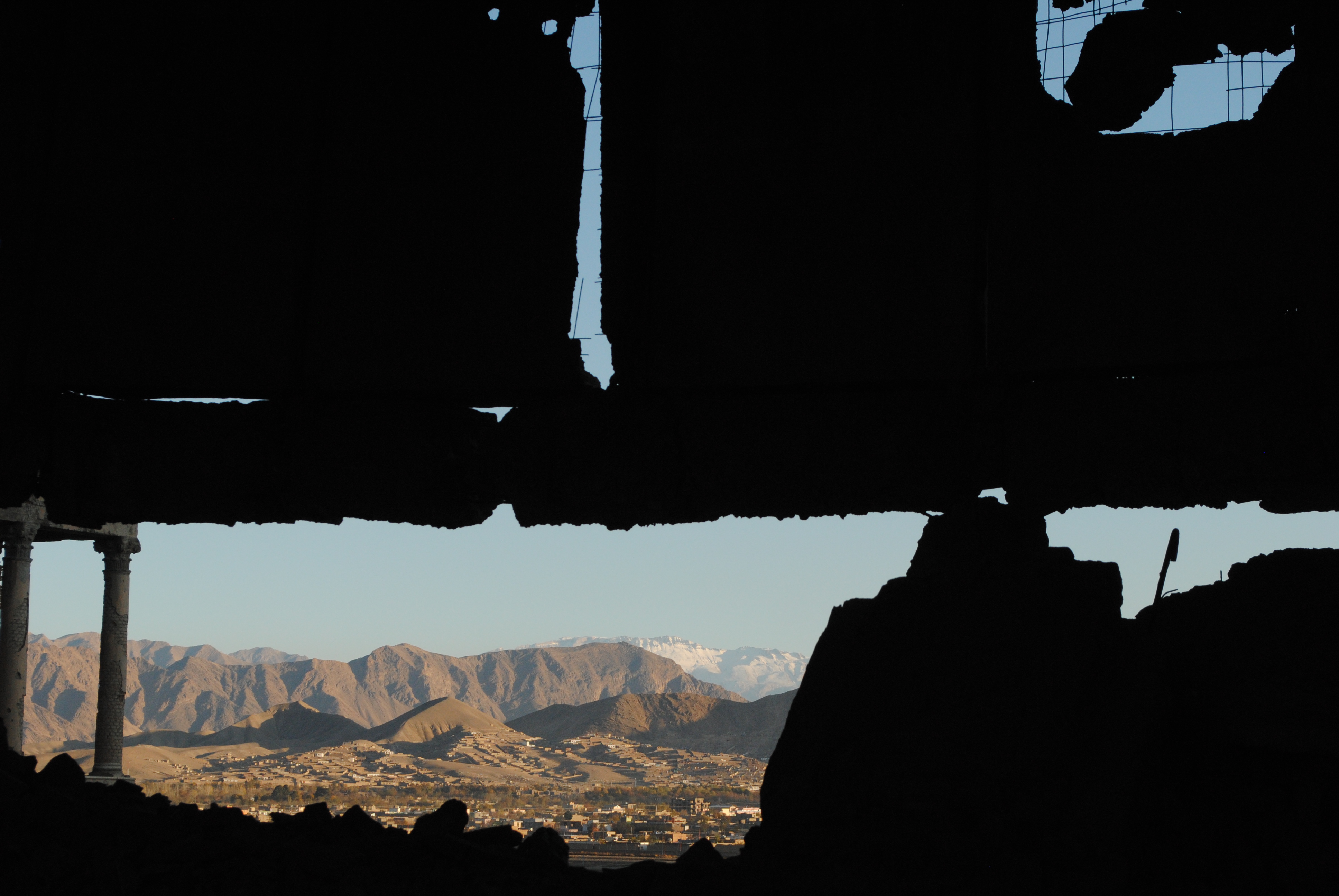
Darulaman Palace, Kabul

The prospect of yet another general history of Afghanistan is unlikely to excite. But Amin Saikal’s updated Modern Afghanistan, reprinted this year after a first edition in 2004, is an exception. Saikal is that rarity among published authors on Afghanistan: an Afghan, and his work demonstrates a cultural understanding that is usually lacking among foreign historians and political scientists. He relies on first-hand interviews with informed Afghans, and uses Afghan sources written in Dari as well as others from Soviet archives. This allows Saikal to see his country’s historical development through social and political traditions that most Western historians ignore, or fail to see altogether.

Afghanistan’s state fragility, he argues, is inherent in systems of rule derived from families that were dynastic and polygamous. Such loose patrimonial systems provoked interdynastic rivalry in which challengers often sought external assistance to usurp incumbents. In this way, Afghans are players of their own Great Game: “Any government or official political movement in Afghanistan,” writes Saikal, “whatever its proclaimed goals and position on the left-right continuum, recruited, mobilised support and operated according to criteria of ethnic/tribal/clan solidarity. All prominent ‘Constitutionalists’ in the age of Habibullah and Amanullah were Durrani Pashtuns, linked by conjugal and patronage ties. Through the ‘liberal’ and ‘democratic’ periods in the post-Second World War era, the Mohammadzai clan never relinquished power”.

Consequently, Saikal sees President Hamid Karzai as little more than a “Pashtun Khan” singing to the United States’s tune of liberal democracy and centralized government, while in reality “operating along the lines of the past”. The emergence of a “Karzai cartel”, in which the President’s brothers and half-brothers “as well as secondary relatives and ethnic loyalists, came to play a dominant role in politics, business, trade and outreach activities”, is proof of the persistence of “family rule” in Afghan politics.

Saikal’s use of sources, his insight into the process of internal political change, and his somewhat sympathetic view that, in the end, Afghans have always been the main agents of their history, make Modern Afghanistan essential reading for anyone wanting original, informed perspectives on the country’s historical development since its “foundation” under Ahmad Shah Durrani in 1747.


Times Literary Supplement